Guide to Schools in Japan for International Students
This guide details how to study abroad in Japan for foreign students, including processes, visas, costs, top destinations, and expert tips. Discover more.
 Skip to content
Home • Studying Abroad in Japan • Schools in Japan
Find the best schools in Japan for international students, regardless of your career goals and lifestyle.
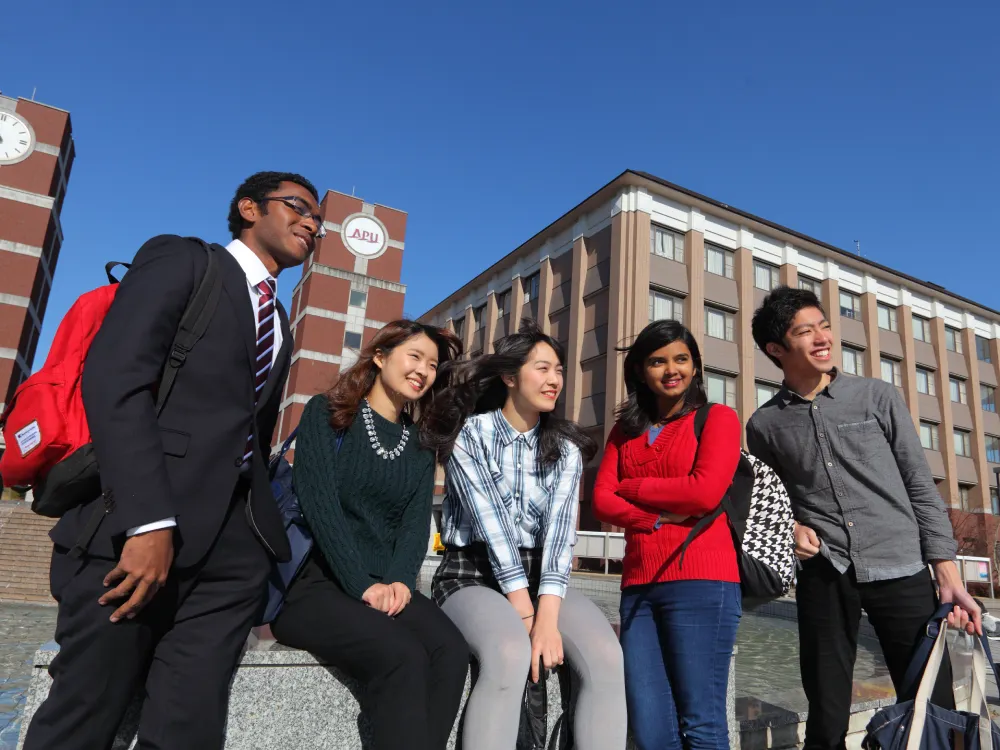
Japan is opening its doors to more international students than ever, intending to welcome 400,000 students by 2033. Japan plans to move beyond its reputation as a cultural destination and is actively inviting students from around the world to study, build skills, and shape their future there. For those considering studying abroad in Japan, this shift means more English-taught programmes (ETPs) and stronger pathways from education into career opportunities in the world’s third-largest economy.
Studying in Japan offers education plus a chance to experience a new culture, build local connections, and gain insight into a leading economy. Living and studying there develops language skills and confidence in a new environment. Beyond academics, the experience develops cultural awareness and adaptability by showing how people communicate and collaborate, skills highly valued by employers for future study or career opportunities.
The primary advantages include world-class public safety, academic prestige that carries weight across Asia, and a unique part-time work culture that encourages financial independence.
DID YOU KNOW?
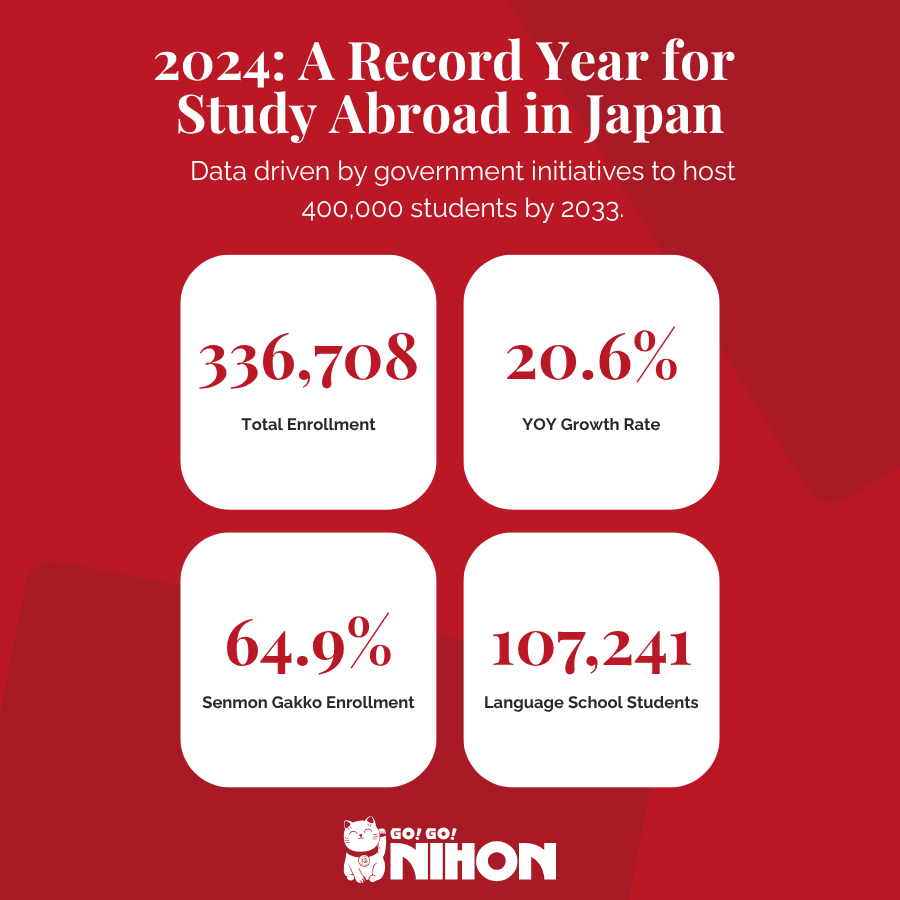
As of May 2024, international student enrollment in Japan hit a record high of 336,708, representing a 20.6% increase from the previous year.
While the opportunities are vast, international students must navigate high-context social expectations, and for those who don’t know Japanese, a massive language barrier.
PRO TIP:
Failing to meet strict attendance requirements is one of the most common reasons international students face difficulties during their student visa renewal process.
The Japanese academic system is organized into a hierarchy of national research universities, public regional schools, and private specialized colleges, primarily following an April start date. Language schools offer 2-4 terms a year depending on the school and program.
This structure is designed to align with the domestic corporate hiring season, moving students directly from graduation into the workforce.
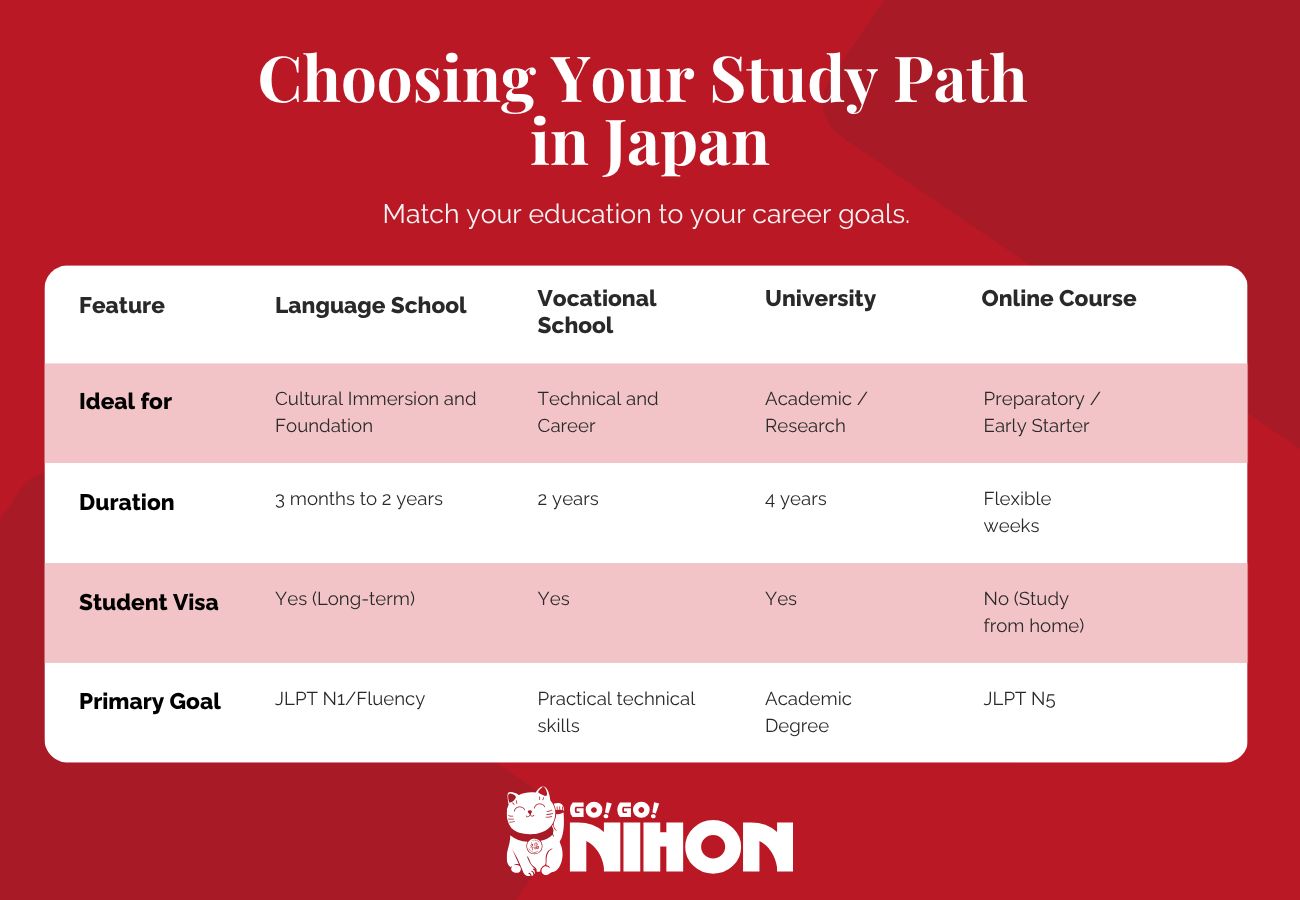
International students in Japan primarily choose between intensive language schools, technical vocational schools, and four-year universities, depending on their goals.
Universities provide academic depth and global recognition, while vocational schools (Senmon Gakko) focus on immediate employability in fields like game design, AI, and hospitality. Language schools remain the essential gateway for those requiring foundational fluency to pass entrance exams or secure a local job.
| School Type | Duration | Typical Outcome | Student Visa Required? |
|---|---|---|---|
| Language Schools | 3 months to 2 years | Language foundation for use in the work market or to meet further education requirements | Yes (for long-term courses) |
| Vocational School | 2 years | Practical, industry-specific skills | Yes |
| University and Graduate Schools | 1 – 4 years | Academic degree, research, and career pathways | Yes |
| Online Courses | Flexible (weeks to months) | Student visa prerequisites and certified hours | No (study from home) |
Japanese language schools serve as the primary gateway for the majority of foreigners moving to Japan, providing the necessary linguistic foundation for long-term career or academic success. These schools focus on full immersion, helping students master everything from basic Japanese to the advanced proficiency required to pass the JLPT N1.
For a deeper look at your options, see our Japanese language schools in Japan guide.
These programs are designed for students aiming for rapid proficiency and academic rigor. These programs teach material at a fast, efficient pace and require daily self-study, making them ideal for serious students who still want a small amount of time to explore.
| Location Type | School Name | City |
|---|---|---|
| Tokyo-Based | Akamonkai Japanese Language School | Tokyo |
| Sendagaya Japanese Institute | Tokyo | |
| Shinjuku Japanese Language Institute | Tokyo | |
| Regional | ECC Kokusai College of Foreign Languages | Osaka |
| ISI Language School Kyoto | Kyoto | |
| ISI Language School Osaka | Osaka | |
| Hokkaido Japanese Language Academy | Sapporo | |
| Fukuoka Foreign Language College (FFLC) | Fukuoka |
These schools offer a “Medium Intensity” curriculum designed to provide a perfect balance between a steady, effective study pace and having enough free time to enjoy daily life in Japan.
| Location Type | School Name | City |
|---|---|---|
| Tokyo-Based | ISI Language School | Tokyo |
| Tokyo Galaxy Japanese Language School | Tokyo | |
| UNITAS Japanese Language School | Tokyo | |
| Regional | ARC Academy Kyoto | Kyoto |
| Daiwa Academy | Osaka | |
| Yu Language Academy Osaka | Osaka | |
| Communica Institute | Kobe | |
| Okayama Institute of Languages | Okayama | |
| Kurume Seminar Specialized Training College | Fukuoka | |
| Yu Language Academy Sapporo | Sapporo | |
| UNITAS Japanese Language School Kofu | Kofu, Yamanashi | |
| Japan International Inst. of Cybernetics | Matsudo, Chiba |
These schools are best suited for students who prefer a slightly slower, more relaxed pace or want a heavier emphasis on practical speaking and real-life conversational skills.
| Location Type | School Name | City |
|---|---|---|
| Tokyo-Based | KAI Language School | Tokyo |
| ALA (Academy of Language Arts) | Tokyo | |
| Shibuya Gaigo Business School | Tokyo | |
| Regional | SPC Nagoya | Nagoya |
| Interculture Language Academy | Kobe |
Language schools offer 2-4 terms a year depending on the school and program. You can read more about how Japanese language school terms work to help plan your arrival.
If you are unsure which intensity level matches your goals, our team can help you choose the right Japanese language school for your specific needs. Contact us today for free, personalized support through the entire application process.
Vocational schools in Japan for international students, known as senmon gakko, provide a direct and efficient pathway to the local workforce through practical, industry-specific training. These institutions focus on high-demand technical skills rather than academic theory, making them an ideal choice for those pursuing further education in Japan with the intent to stay and work.
In early 2024, the Japanese government relaxed the “relevance” rule for vocational school graduates. This change makes it significantly easier for foreigners with a senmon gakko degree to obtain a work visa even if their job offer isn’t a 100% direct match for their specific major.
Explore our full guide on trade schools in Japan (Senmon Gakko) to see if this career-focused path is right for you.
Japanese universities provide world-class academic degrees that are increasingly accessible to foreigners through a growing number of English-taught programs (ETPs). These institutions are ideal for students seeking long-term career stability in Japan and a deep dive into academic research. You can browse our list of universities in Japan that teach in English for more information.
Yes. You do not need to be fluent in Japanese to earn a degree in Japan. Many top-tier institutions offer English-medium Instruction (EMI), often referred to as E-track programs, where every class is taught in English.
This government initiative includes 37 top-tier institutions, such as Ritsumeikan Asia Pacific University (APU), which provide multicultural environments and high international student ratios. For business leaders, GLOBIS University offers an English-track MBA that allows students to build a network in Tokyo without advanced Japanese skills. Other forward-thinking institutions like Eikei University of Hiroshima also offer specialized English-taught programs (ETPs).
PRO TIP
While you can study in English, the "glass ceiling" for professional growth in Japan often remains tied to language; building local fluency alongside your English degree is the key to long-term success.
Starting your Japanese language journey with online courses is a practical way to prepare for your move while meeting essential visa rules from home. Check out our recommended online Japanese language lessons to get started.
Not sure which course fits your visa goals? Contact Go! Go! Nihon team today for a free consultation on the most effective path for your move. You can also view our full list of Japanese online courses to find a schedule that works for you.
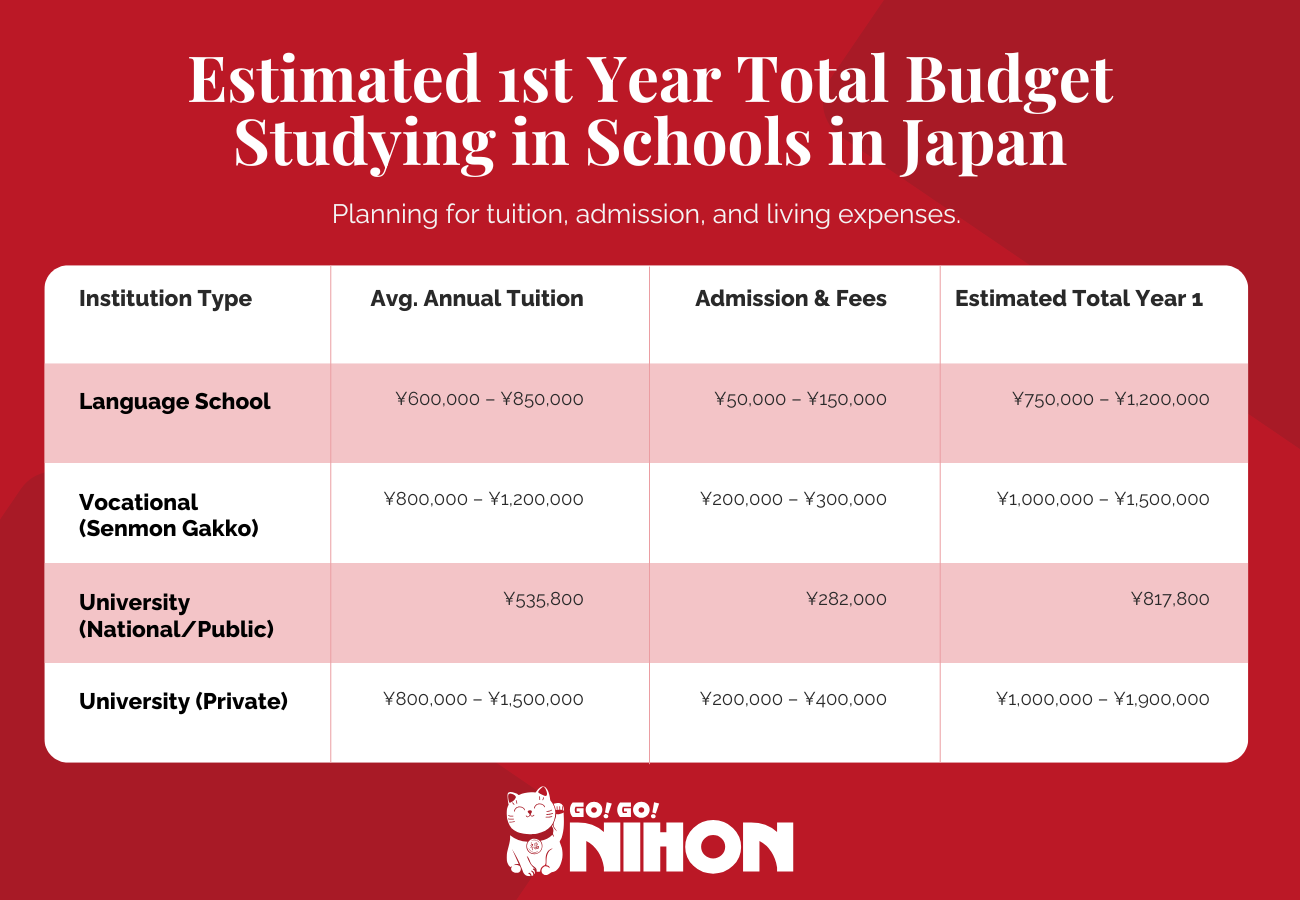
Annual tuition fees in Japan range from ¥535,800 to ¥1.5 million, with total first-year costs typically reaching between ¥650,000 and ¥1.9 million.
National and public universities are the most affordable option, charging a standardized annual tuition of ¥535,800. Vocational schools and private universities generally cost between ¥800,000 and ¥1.5 million per year. Language schools offer mid-range first-year estimates between ¥650,000 and ¥1,000,000. Online programs provide the lowest entry point, with total first-year costs starting at ¥140,000. These rates are currently 20% to 30% more affordable for many students due to recent currency shifts.
|
School Type |
Typical Annual Tuition (JPY) |
Admission & Other Fees (JPY) |
Total Estimated 1st Year (JPY) |
|---|---|---|---|
| Japanese Language Schools |
¥600,000 – ¥850,000 |
¥50,000 – ¥150,000 |
¥750,000 – ¥1,200,000 |
| Vocational Schools (Senmon Gakko) |
¥800,000 – ¥1,200,000 |
¥200,000 – ¥300,000 |
¥1,000,000 – ¥1,500,000 |
| Universities (National/Public) |
¥535,800 |
¥282,000 |
¥817,800 |
| Universities (Private) |
¥800,000 – ¥1,500,000 |
¥200,000 – ¥400,000 |
¥1,000,000 – ¥1,900,000 |
| Online Schools |
¥114,870 – ¥304,450* |
¥25,000 |
¥140,000 – ¥330,000 |
DID YOU KNOW?
Despite recent shifts, Japanese tuition remains significantly lower than that of private or out-of-state institutions in the United States or the United Kingdom.
IMPORTANT NOTICE:
Go! Go! Nihon does not provide support for scholarship applications. To apply for programs like the MEXT scholarship or other financial aid, you should contact the Japanese embassy in your home country. Our team focuses on helping you find the right school and supporting your enrollment and visa application.
While Japanese universities are not free, the government-funded MEXT scholarship can provide full tuition coverage and a monthly stipend for eligible high-achieving international applicants.
For those not eligible for MEXT, JASSO grants offer smaller, supplemental monthly payments to help offset daily living expenses. These financial aid options make Japan one of the most accessible advanced economies for dedicated international students.
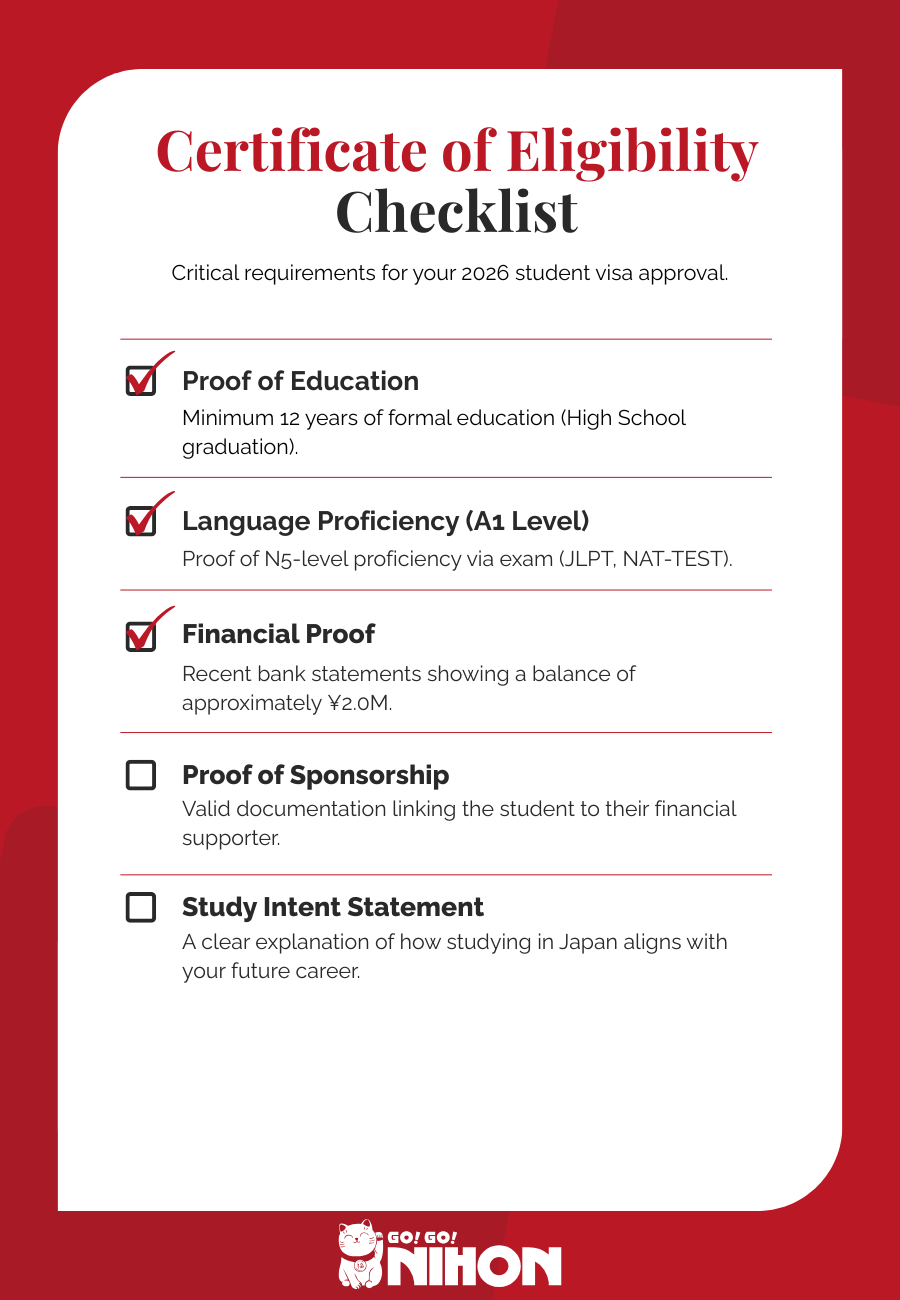
Entry into Japanese schools involves a combination of academic records, language proficiency scores, and standardized tests like the Examination for Japanese University Admission (EJU).
If you are pursuing a degree taught in Japanese, the EJU is usually mandatory, testing your language ability along with mathematics and science. For English-track programs, institutions typically focus on your academic GPA and scores from the TOEFL or IELTS to ensure you can succeed in a rigorous environment.
DID YOU KNOW?
The EJU is held twice a year in June and November and is used by approximately 95% of Japanese universities to screen international undergraduate applicants.
The requirements for studying in Japan vary significantly depending on the type of institution you choose. Use the table below as a general guide to help you prepare your application documents.
| Requirement | Language Schools | Vocational Schools | Universities |
|---|---|---|---|
| Minimum Age | 18 (usually) | 18 | 18 |
| Education | 12 years (High School)* | 12 years (High School)* | 12 years (High School)* |
| Academic Score | No minimum GPA | Varies by course | Varies (EJU may be required) |
| Language Level | A1 Proficiency (JLPT N5 or school assessment) | JLPT N2 or equivalent | English-taught programs (TOEFL/IELTS) OR JLPT N2/N1 |
| Financial Proof | ¥1,200,000 – ¥2,000,000+ | ¥2,000,000+ | ¥4,000,000 (Total for 4-year program) |
*NOTE:
Students from countries with 11-year secondary education systems may be required to complete a "preparatory year" to meet the 12-year formal education requirement necessary for school admission and student visa approval.
Language schools in Japan do not require a specific academic score for admission, as the primary focus is on your financial stability and your intent to learn the language. For further education, such as universities and vocational schools, admission criteria vary widely based on the specific institution and the course you choose.
| School Type | Admission Criteria Summary | Specific Academic/Language Requirements | Key Factors for Immigration/Admission |
|---|---|---|---|
| Language Schools | Focus on dedication and financial stability. | No Minimum GPA. | “Study intent” and proof of funds; in some cases, proof of previous study hours. |
| Universities | Focus on dedication and financial stability.Standards vary by program. | May look at academic scores from home country, language proficiency test scores, EJU scores, school entrance exam scores | EJU performance or personal interviews. |
| Vocational Schools | Focus on specific language skills or professional experience. | Reaching JLPT N2 level is often a significant factor. | JLPT N2 level weighed heavily alongside past high school or college grades. |
You can typically start at a language school or university in Japan at 18 years old, as these institutions require the completion of 12 years of formal education (high school graduation). While there is no official upper age limit, immigration authorities may more closely review the “study intent” of applicants over 30 or those with significant gaps in their education and work history.
| School Type | Target Audience/Requirement | Key Consideration |
|---|---|---|
| Language Schools | Adults of all ages (from recent high school graduates to retirees). | Mature students should clearly explain how learning Japanese benefits their career or personal goals. |
| Universities and Vocational Schools | Students who have completed secondary education. | Students from 11-year secondary education systems may need a “preparatory year” to meet the Japanese 12-year requirement. |
DID YOU KNOW?
The requirement for 12 years of formal education is a critical factor for both school admission and student visa approval.
To secure a student visa for Japan, you must demonstrate that you have sufficient funds, typically around 2 million JPY for your first year, to cover your tuition and living expenses. This financial proof ensures that you can focus on your education without needing to rely entirely on part-time work. The exact amount required can vary depending on your school type and the length of your intended stay.
| Institution Type | Program Length | Estimated Financial Proof Requirement (JPY) | Notes |
|---|---|---|---|
| Language Schools | 1 Year | ¥1,500,000 – ¥2,000,000 | |
| Universities and Graduate Schools | 1-4 year programs | ¥1,500,000 – ¥4,000,000 | Higher threshold to confirm stable financial foundation for longer commitment. |
| Vocational Schools | Multi-year (typically 2-4 years) | ¥3,000,000 | Baseline to cover first-year tuition (often higher than language schools) plus living costs. |
Choosing the best city depends on balancing your career goals with your lifestyle; Tokyo is the undisputed hub for networking, while regional cities like Fukuoka and Okayama offer lower rent.
Tokyo hosts over 107,000 international students, roughly 32% of the national total, making it the primary destination for global networking. However, cities like Okayama and Fukuoka are becoming favorites for Western students seeking deeper community integration and higher quality of life.
To help you decide, we have analyzed the best places in Japan for studying abroad based on student priorities such as cost of living, job markets, and lifestyle.
DID YOU KNOW?
Outside of Tokyo, the Kansai region (Osaka and Kyoto) remains a powerful academic corridor, hosting over 50,000 international students at world-renowned research institutions.
The length of your school day in Japan depends on the type of institution you choose, ranging from half-day language immersion to full-time academic or vocational training. Understanding these schedules helps you plan your time for focused study, part-time work, and exploring your new community.
| School Type | Typical Schedule / Duration | Notes |
|---|---|---|
| Language Schools | Half-day sessions, 3.5 to 4 hours | Morning or afternoon block, leaving time for homework/activities. |
| Vocational Schools (Senmon Gakko) | Full-time, approximately 9:00 AM to 4:00 PM or 5:00 PM, Monday–Friday | Rigorous schedule to gain practical, industry-standard skills (ex: Yokohama Design College). |
| Universities and Graduate Schools | Varies significantly (credit-based) | Flexible course loads depending on major and semester, allowing for research and academic commitments. |
Schools in Japan for international students offer more than just a classroom; they provide a clear, structured pathway to a new career and a new life in Japan. With the recent depreciation of the yen, pursuing your education at one of our 30+ partner institutions has become 20% to 30% more affordable than in previous years.
Our expert team has guided over 17,000 students through the complexities of visa applications and school selection since 2009, ensuring you have the support needed to succeed. Whether you are aiming for a high-intensity language program or a specialized vocational or further education course, we help you remove the confusion and make your dream achievable.
If you’re ready to start your journey, contact our team today for free, personalized support.
To find the perfect fit for your goals, you can also explore our full list of school partners across Tokyo, Osaka, and beyond.
This guide details how to study abroad in Japan for foreign students, including processes, visas, costs, top destinations, and expert tips. Discover more.

This guide details how to study abroad in Japan for foreign students, including processes, visas, costs, top destinations, and expert tips. Discover more.

This guide details how to study abroad in Japan for foreign students, including processes, visas, costs, top destinations, and expert tips. Discover more.

This guide details how to study abroad in Japan for foreign students, including processes, visas, costs, top destinations, and expert tips. Discover more.

This guide details how to study abroad in Japan for foreign students, including processes, visas, costs, top destinations, and expert tips. Discover more.