Skip to content

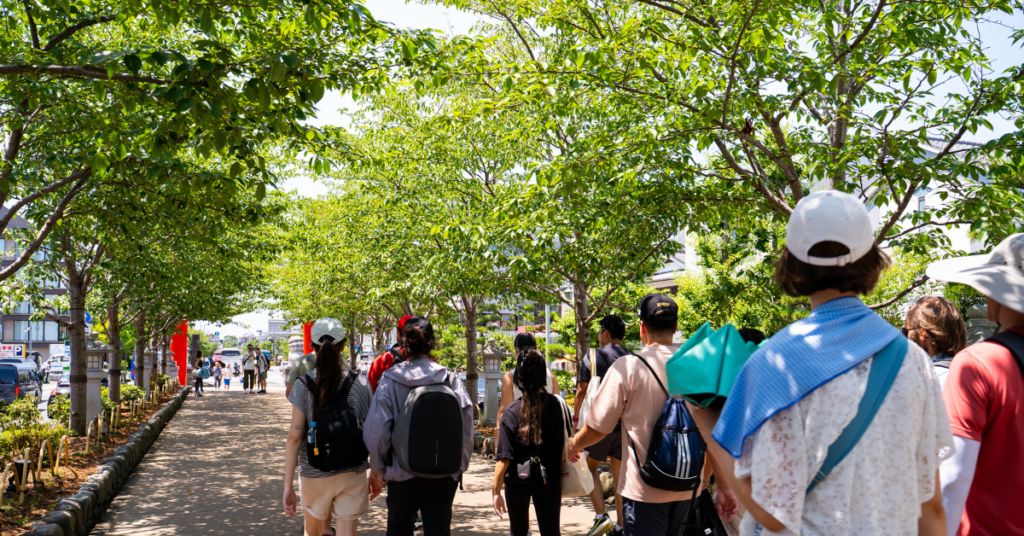
Summer in Japan is hot, loud, sticky, sweet, and full of chances to practice your Japanese outside the classroom. Between conbini snack runs, fireworks festivals, and shaved ice shops with menus longer than a train timetable, this season provides you with real conversations, real listening challenges, and real vocabulary that you’ll encounter in real life.
Here are eight summer activities that double as language practice, plus the vocabulary and phrases to get you started.

1. Conbini “ice cream bracket” challenge
Japanese convenience stores roll out new ice cream flavors all summer long, and comparing them is a language exercise in disguise. Grab a few options with your friends, taste test them, and then debate your rankings in Japanese.
The konbini freezer case is its own little universe. Long-running staples like Garigari-kun (a soda-flavored ice pop with a cult following) and Häagen-Dazs mini cups sit alongside rotating limited-edition flavors that only last a few weeks before disappearing. Summer lineups typically include fruit-forward shaved-ice-style bars, rich matcha or hojicha soft serve cups, mochi-wrapped ice cream, and citrus or soda-flavored ice pops marketed specifically for hot weather. Convenience store chains also compete with exclusive collaborations, so the same “flavor” can look completely different depending on whether you’re at 7-Eleven, Lawson, or FamilyMart. That variety is exactly what makes a bracket challenge fun: pick one item from each category (ice pop, cup, mochi, soft serve) and let your group debate which reigns supreme.
Vocabulary to learn
| Japanese | Reading | Meaning |
| 期間限定 | kikan gentei | limited time only |
| シャリシャリ | shari-shari | slushy / icy texture |
| さっぱり | sappari | refreshing / light flavor |
| 濃厚 | nōkō | rich / creamy flavor |
| 新発売 | shinhatsubai | newly released |
| 食感 | shokkan | texture / mouthfeel |
Ways to practice
Read the packaging katakana and kanji to identify seasonal ingredients before you even open the wrapper. Then debate and rank your favorites with classmates using comparative grammar patterns, such as 「Aの方がBより濃厚だと思う」(I think A is richer than B).
2. Summertime conbini drinks
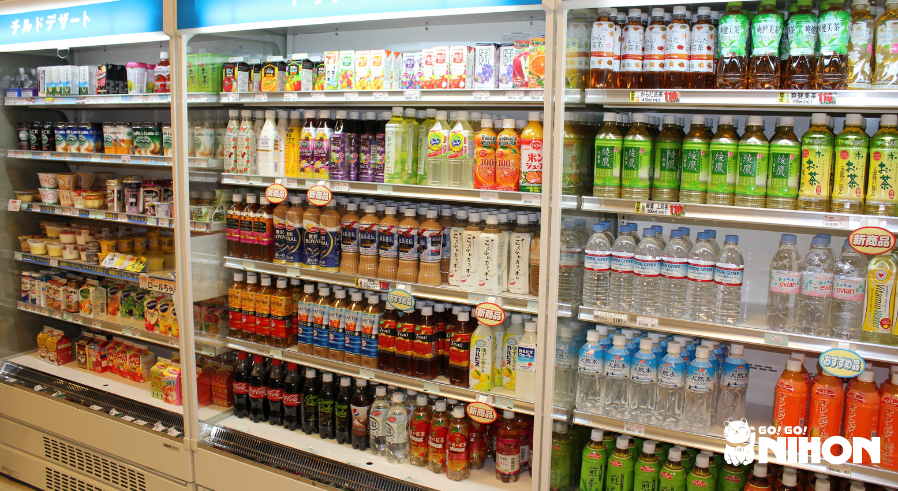
Summer drink shelves in Japan are packed with heatstroke-prevention branding and seasonal flavors like plum and salt lemon. Scanning labels and asking staff for recommendations is an easy, low-pressure way to build reading and speaking confidence.
A few drinks worth trying (and reading the label of) as the temperature climbs:
- Pocari Sweat — An ion supply drink built for hydration and salt replenishment, and one of the most common heatstroke-prevention drinks in any conbini fridge.
- Aquarius — A similar electrolyte drink, often marketed alongside sports and outdoor activity.
- Calpis Soda — A fizzy, milky, slightly sweet summer classic, also sold as a concentrate you dilute with water.
- Mugicha (barley tea) — A caffeine-free, roasted-barley iced tea that’s a staple in Japanese homes all summer.
- Ramune — A retro glass-bottle soda sealed with a marble, popular at festivals as much as conbini.
- Salt lemon or ume (plum) flavored waters — Explicitly marketed around 塩分補給 (salt replenishment) for hot, humid days.
Vocabulary to learn
| Japanese | Reading | Meaning |
| 熱中症対策 | netchūshō taisaku | heatstroke prevention |
| 塩分補給 | enbun hokyū | salt replenishment |
| 梅 | ume | plum flavor |
| 炭酸 | tansan | carbonation / fizz |
| 冷やし | hiyashi | chilled |
| 水分補給 | suibun hokyū | hydration |
Ways to practice
Scan labels for summer health keywords to understand what each drink claims to do. Then try asking a store clerk for a recommendation: 「夏限定のドリンクはどこにありますか?」 (Natsu gentei no dorinku wa doko ni arimasu ka? — “Where are the summer-limited drinks?”)
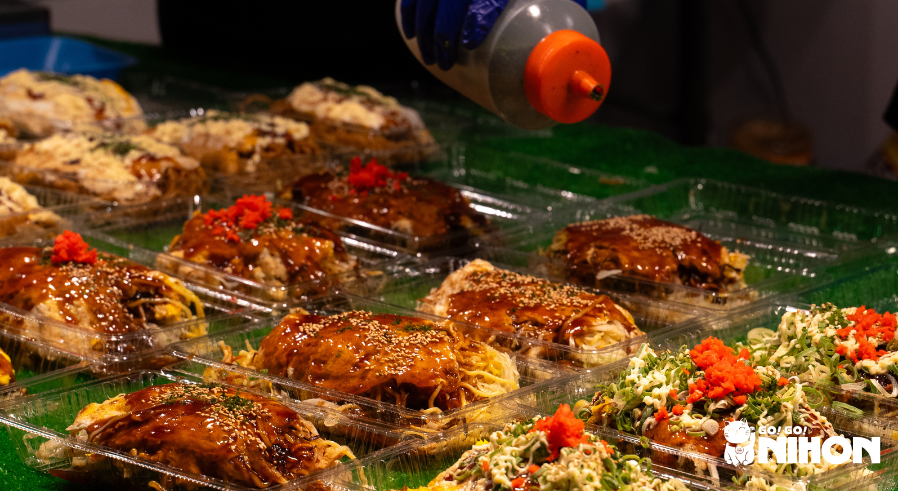
3. Matsuri yatai (food stalls)
Summer in Japan is festival season. From mid-July through August, cities and neighborhoods host matsuri tied to shrines, Obon (a Buddhist tradition honoring ancestors), or simply the season itself, often featuring taiko drumming, dancing, portable shrines (mikoshi) carried through the streets, and rows of yatai lining the approach to a shrine or a park. For many, the yatai are the main event: rows of food stalls selling takoyaki, yakitori, and shaved ice, all with vendors calling out orders and totals at high speed. Ordering here forces you into a native Japanese environment where you have to think on your feet.
Vocabulary to learn
| Japanese | Reading | Meaning |
| 屋台 | yatai | food stall |
| 〜個 | ~ko | counter for small, round items (takoyaki) |
| 〜本 | ~bon / ~pon / ~hon | counter for long, cylindrical items (skewers) |
| お会計 | okaikei | the bill / payment |
| 並ぶ | narabu | to line up |
| 出店 | shutten | opening a stall or setting up a booth |
Ways to practice
Order out loud using the correct item counters instead of just pointing at the menu. Then tune your ear to the vendor’s rapid-fire numbers and casual transactional phrases so you can train your real-world listening skills. It’ll be hard at first, but the more you do it, the faster you’ll improve.
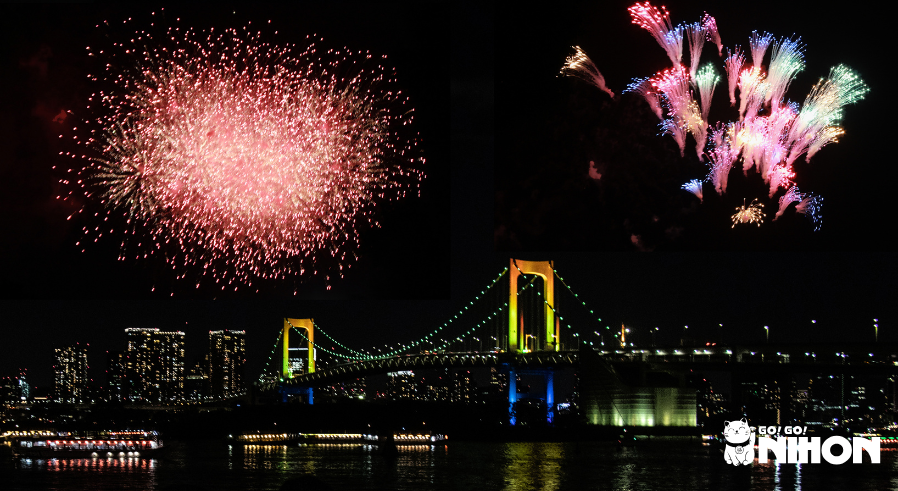
4. Hanabi taikai (fireworks display)
Fireworks festivals draw huge crowds, which means megaphone announcements, station crowd control, and plenty of chances to ask locals for help finding a good spot.
Hanabi taikai date back centuries in Japan, with roots often traced to Edo period displays meant to ward off evil spirits and honor the dead during summer. Today they’re one of the biggest draws of the season: major events like the Sumidagawa Fireworks Festival in Tokyo or the Tenjin Matsuri in Osaka can draw hundreds of thousands of spectators and launch tens of thousands of fireworks over a single evening. Most attendees dress in yukata, arrive hours early to claim a spot along a riverbank or park, and treat the event as a full evening out, with yatai food stalls often set up nearby. Because the crowds are so large, stations and organizers rely heavily on spoken and loudspeaker announcements to manage the flow of people, which makes hanabi taikai a great real-world listening challenge.
Vocabulary to learn
| Japanese | Reading | Meaning |
| 花火大会 | hanabi taikai | fireworks festival |
| 混雑 | konzatsu | congestion / crowding |
| 規制退場 | kisei taijō | regulated / controlled exit |
| 穴場スポット | anaba supotto | hidden gem / lesser-known viewing spot |
| 打ち上げ花火 | uchiage hanabi | launched fireworks |
| 浴衣 | yukata | summer kimono |
Ways to practice
Practice listening comprehension by tuning in to live megaphone and train station crowd control announcements — they repeat often, so you will have several chances to catch the details. If you’re unsure which way to go, ask: 「一番混んでいないルートはどちらですか?」 (Ichiban konde inai rūto wa dochira desu ka? — “Which route is the least crowded?”)
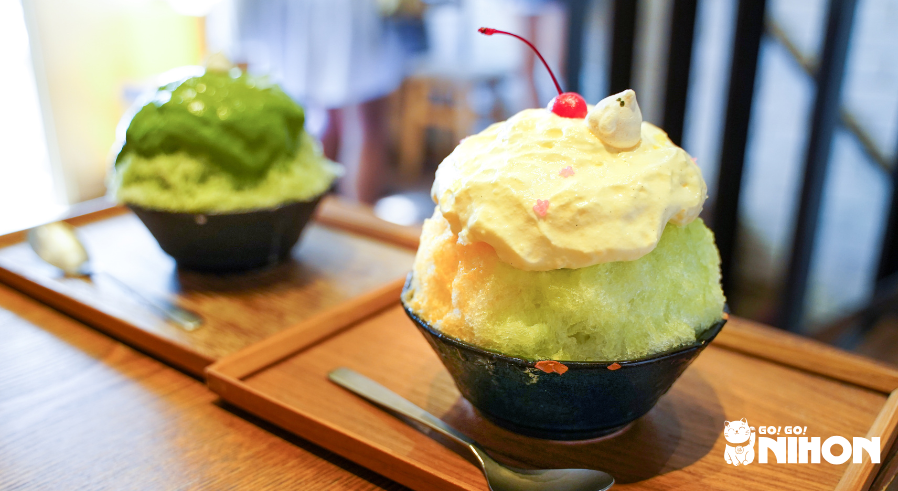
5. Gourmet kakigori
Modern kakigori shops have moved far beyond simple syrup-on-ice, with menus featuring natural ice, culinary foam, elaborate flavor combinations, and rarely any English in sight.
Kakigori has a surprisingly long history. Shaved ice desserts are mentioned in “The Pillow Book” (Makura no Sōshi), a Heian-period text from around the 10th century, where ice shavings drizzled with sweet syrup were described as a luxury enjoyed by the aristocracy, since ice had to be harvested in winter and carefully stored. Kakigori became widely accessible to the general public later, after mechanical ice shavers made it affordable, and it settled into its familiar form as a summer festival and shopfront treat in the 20th century. In the past decade, a “gourmet kakigori” boom has taken over, with specialty cafes using ultra-clear natural ice, house-made syrups, and fine-dining techniques like espūma foam to turn a once-simple snack into a seasonal event worth lining up for.
Vocabulary to learn
| Japanese | Reading | Meaning |
| かき氷 | kakigōri | shaved ice |
| 天然氷 | tennen gōri | natural ice (premium quality) |
| エスプーマ | esupūma | culinary foam topping |
| 甘酸っぱい | amazuppai | sweet and sour |
| シロップ | shiroppu | syrup |
| ふわふわ | fuwafuwa | fluffy |
Ways to practice
Try reading a specialized cafe menu without any English translation to guide you. Afterward, describe what you ordered to a friend, or write a short review in your journal, using nuanced flavor and texture adjectives.
6. Nagashi somen
Nagashi somen — noodles sent flowing down a bamboo chute for you to catch with your chopsticks — is as much a listening exercise as it is a meal. Staff usually explain the rules before you start.
The concept is simple but the execution takes coordination: thin somen noodles are released into a length of split bamboo (or a plastic version at more casual spots) with cold water running through it, and diners sit along the chute, chopsticks ready, catching noodles as they slide past. You dip whatever you catch into a small cup of chilled mentsuyu (a soy-based dipping sauce) before eating.
Vocabulary to learn
| Japanese | Reading | Meaning |
| 流しそうめん | nagashi sōmen | flowing noodles |
| 竹の猪口 | take no choko | bamboo dipping sauce cup |
| 上流 / 下流 | jōryū / karyū | upstream / downstream positions |
| 「とれた!」 | toreta! | “I caught it!” |
| 具 | gu | toppings / ingredients |
| 涼しい | suzushii | cool / refreshing |
Ways to practice
Listen closely to the step-by-step etiquette instructions from restaurant staff before the noodles start flowing. Once they do, practice reacting in the moment with casual exclamations like 「とれた!」as you catch (or miss) your noodles.
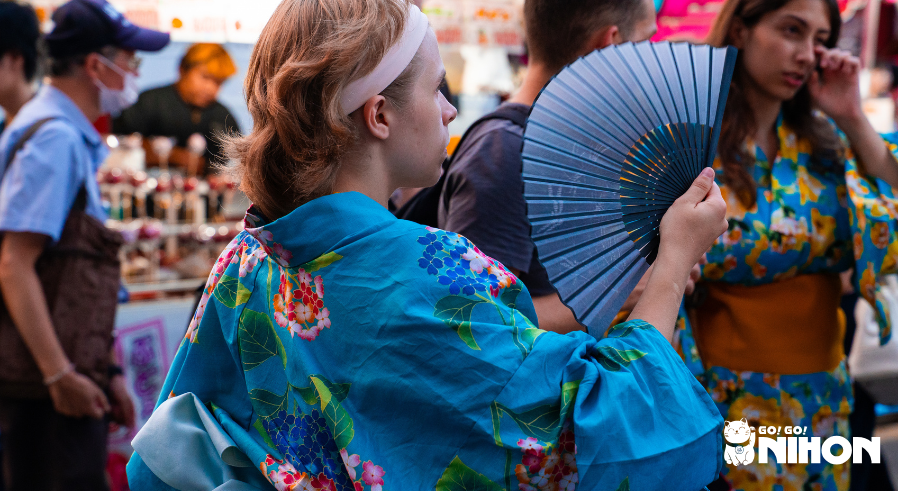
7. Sensu (folding fan) workshop
Painting or dyeing your own folding fan under the guidance of a craftsman is another way to practice your nihongo. Instructions come in real time, with no subtitles or handouts to lean on.
The folding fan is believed to have originated in Japan around the Heian period, later spreading to China and beyond, and it remains a genuine craft tradition today rather than just a souvenir. Kyoto and Gifu are especially well known for sensu production, where shokunin still hand-cut bamboo ribs, stretch and glue paper or silk panels, and dye or paint each fan individually, often specializing in just one step of the process across an entire career. Beyond keeping cool, sensu are used in traditional dance, tea ceremony, rakugo storytelling, and as formal gifts, so the patterns and colors often carry seasonal or symbolic meaning. A hands-on workshop typically has you paint or dye your own paper panel before a craftsman folds and finishes it, giving you a fan you actually made with your own two hands.
Vocabulary to learn
| Japanese | Reading | Meaning |
| 扇子 | sensu | folding fan |
| 職人 | shokunin | artisan / craftsman |
| 染める | someru | to dye / color |
| 「これでいいですか?」 | kore de ii desu ka? | “Is this right?” |
| 手作り | tezukuri | handmade |
| 完成 | kansei | completion / finished product |
Ways to practice
Follow real-time, hands-on instructions from the artisan without any English to fall back on. When you’re unsure of a step, practice asking a polite clarifying question mid-process: 「これでいいですか?」
8. Summer stargazing
Japan’s clear summer nights are perfect for spotting the Milky Way and shooting stars, as well as for building vocabulary through apps and folklore.
A few spots in Japan are especially well known for stargazing. Achi Village in Nagano Prefecture has repeatedly been ranked among the best places in Japan to view the night sky and even runs official stargazing tours. Iriomote Island in Okinawa is registered as a Dark Sky Park, with minimal light pollution and clear views of the Milky Way for much of the year. Hokkaido’s Biei and the Bihoro Pass are popular for their wide open, low light pollution countryside, and the area around Mt. Fuji’s fifth station offers high-altitude viewing away from city lights. If you’re studying in a major city, even a short train ride out to the surrounding countryside can make a noticeable difference on a clear summer night.
Vocabulary to learn
| Japanese | Reading | Meaning |
| 天の川 | amanogawa | The Milky Way |
| 星座 | seiza | constellation |
| 流れ星 | nagareboshi | shooting star |
| 天体観測 | tentai kansoku | stargazing / astronomical observation |
| 満天の星 | manten no hoshi | sky full of stars |
| 望遠鏡 | bōenkyō | telescope |
Ways to practice
Switch a stargazing app’s system language to Japanese to pick up star and constellation names naturally. Then read traditional Japanese folklore about the summer night sky, such as the Tanabata legend, to build your reading comprehension.
FAQ
Do I need to be fluent to try these activities?
No. Most of these activities work well for beginner to intermediate learners. Reading a conbini label or ordering takoyaki with a counter word is manageable even early on, and the festival settings are forgiving if you need to point or gesture as backup.
What’s the best way to remember all this seasonal vocabulary?
Use it the same day you learn it. Read a drink label, then say the phrase out loud to a clerk; learn a counter word, then use it to order. Context and immediate use help vocabulary stick far better than flashcards alone.
Are festival vendors and shop staff patient with language learners?
Generally, yes. Festival stalls move fast, but a simple, clearly pronounced order goes a long way, and most staff are used to a mix of Japanese and gestures during busy summer events.
Can I practice these activities if I’m studying Japanese outside Japan?
Some, like switching your stargazing app to Japanese or reading about seasonal folklore, work anywhere. Others, like conbini runs and matsuri stalls, are best experienced during a Study Trip or language school stay in Japan.
How does studying at a language school in Japan help with this kind of practice?
Studying in Japan puts you in daily contact with these real-life situations, and classroom learning gives you the grammar and vocabulary foundation to make sense of what you hear and read outside of class. Go! Go! Nihon can help you find a language school and plan your move to Japan so you can turn everyday moments like these into practice.
To learn more about studying Japanese in Japan, make sure to contact us. For more fun Japanese events, cultural tidbits, and vocab, check out our blog.