Skip to content


While you’re preparing for your Japanese language school application or waiting for your student visa, you can continue to make progress in your Japanese studies before arriving in Japan. Anime, manga, video games, movies, TV, books, music, and even your own kitchen can all become practice tools if you approach them with a little intention. Here are eight ways to turn your usual summer downtime into real Japanese practice.

1. Anime marathon
Anime is often the reason people start learning Japanese in the first place, so it makes sense to put it to work. The trick is watching a little differently than you normally would: instead of just following the story, pay attention to how characters actually talk.
Summer is a great time to lean into seasonal and festival episodes specifically, since long-running series often have at least one beach trip, fireworks festival, or summer break arc packed with seasonal vocabulary and casual dialogue.
Vocabulary to learn
| Japanese | Reading | Meaning |
| 吹き替え | fukikae | dubbed |
| 字幕 | jimaku | subtitles |
| 口癖 | kuchiguse | verbal tic / catchphrase |
| 一気見 | ikkimi | binge-watching |
| 声優 | seiyū | voice actor |
| 原作 | gensaku | original source material |
Ways to practice
Watch with Japanese subtitles instead of English so you’re reading and listening at the same time. If a series has an English dub, comparing the dub script to the original Japanese line can also be a quick way to catch idioms and phrases that don’t translate directly.
2. Manga as a reading workout
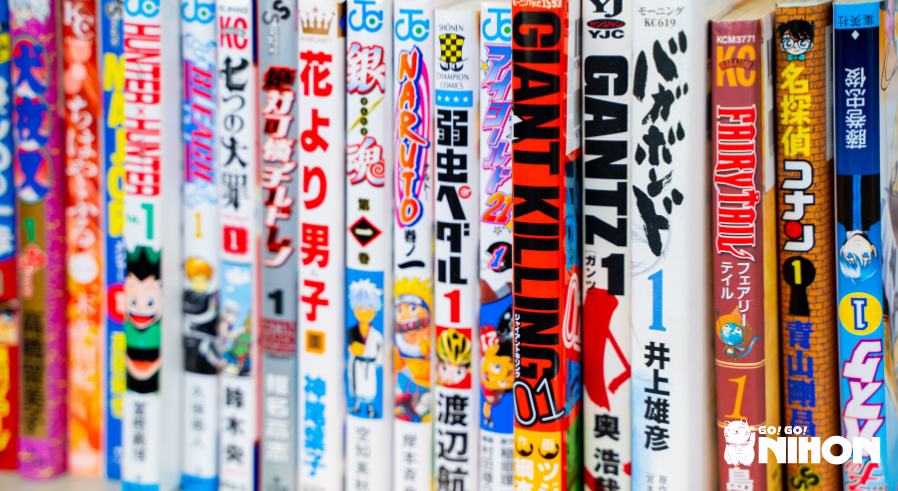
Manga is one of the most approachable ways to build reading skills, especially because so much of it comes with furigana — small readings printed above kanji — which lets you sound out words you can’t yet read on your own. Series originally aimed at children or teens tend to have the most furigana, making them a good entry point even if the story itself isn’t childish.
Vocabulary to learn
| Japanese | Reading | Meaning |
| ふりがな | furigana | reading aid over kanji |
| 擬音語 | giongo | sound-effect words |
| 擬態語 | gitaigo | mimetic/feeling words |
| 巻 | kan | volume counter |
| 表紙 | hyōshi | cover |
| コマ | koma | panel |
Ways to practice
Reading physical or digital volumes also lets you set your own pace in a way subtitled video doesn’t. Keep a small notebook or note app open as you read, and jot down new kanji or expressions as you hit them rather than stopping to look up every single word — you can review your list after finishing a chapter instead of breaking your reading flow constantly.
3. Japanese video games for immersion
Video games put you in constant contact with Japanese without it ever feeling like studying, since you’re reading menus, following instructions, and making choices to actually progress. Games with a language settings option are the easiest entry point: switching a familiar game you’ve already played in English to Japanese means you can lean on context you already know while picking up new vocabulary.
A few good starting points: Animal Crossing: New Horizons is a natural pick, since its relaxed pace and everyday vocabulary (shopping, decorating, chatting with villagers) make it easy to follow even at a lower level. Story of Seasons and other farming sims work similarly. If you want something with more story and voiced dialogue, the Like a Dragon (Yakuza) series is full of everyday conversational Japanese alongside its over-the-top plot, and Pokémon games are a longtime favorite for their simple, repetitive language. For something narrative-driven, Ni no Kuni pairs a Studio Ghibli-style world with manageable dialogue.
Vocabulary to learn
| Japanese | Reading | Meaning |
| 言語設定 | gengo settei | language settings |
| 攻撃 | kōgeki | attack |
| 選択肢 | sentakushi | dialogue/menu choice |
| セーブ | sēbu | save (game) |
| レベルアップ | reberu appu | level up |
| ストーリー | sutōrī | story |
Ways to practice
Slower-paced genres tend to work best for learners. Slice-of-life and farming or life-sim games use everyday, practical vocabulary (shopping, chores, small talk) rather than dense fantasy or technical terms, which makes them easier to follow. If you want a bigger listening challenge, look for a game with full voice acting so you can practice catching spoken dialogue in addition to reading it.
4. Japanese movies and TV shows
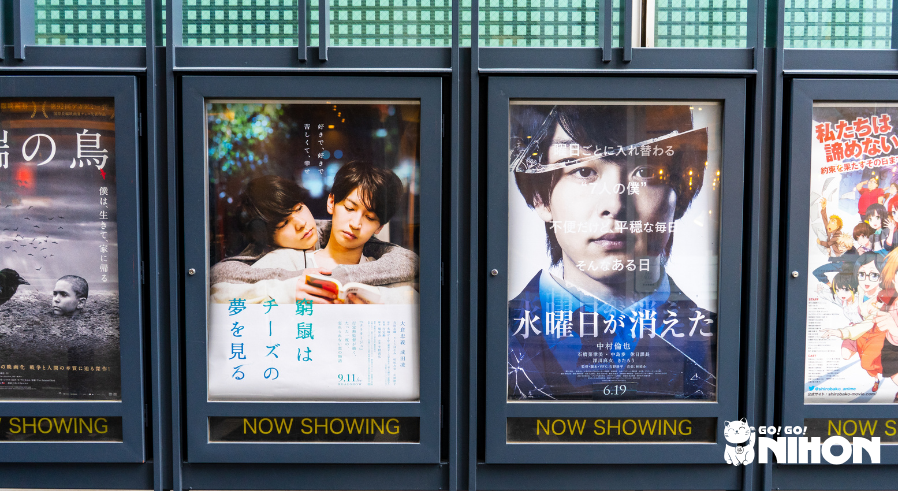
Live-action film and TV give you a complete story to work through and cover a huge range of registers, from the plain, casual speech of a slice-of-life drama to the sharper, more formal exchanges in a workplace or courtroom story. Unlike anime, live action also shows you how people actually move, pause, and react while speaking, which is worth paying attention to if you’re also trying to pick up natural conversational rhythm.
For TV, “The Makanai: Cooking for the Maiko House” (a Kore-eda-directed Netflix series about two friends training in a Kyoto maiko house) is a gentle, slice-of-life watch with a lot of food and everyday vocabulary, plus distinct Kansai dialect if you want exposure beyond standard Tokyo Japanese. “Rebooting” (also released as ブラッシュアップライフ “Brush Up Life”) follows a woman who keeps restarting her life after death, and mixes comedy with genuinely emotional, conversational dialogue. Other solid options include “Midnight Diner: Tokyo Stories,” a quiet anthology series set in a late-night restaurant, and First Love, a romance drama with a mix of everyday and more sentimental language.
For movies, Hirokazu Kore-eda’s other films, like “Shoplifters” and “Like Father, Like Son,” are excellent for naturalistic, everyday dialogue. “Departures (Okuribito),” about a young man who becomes a ritual mortician, mixes formal and casual registers depending on the scene. For something lighter and summer-appropriate, look for one of Japan’s many fireworks festival or ghost story films, both well-established genres you can easily find more of once you search for one.
Vocabulary to learn
| Japanese | Reading | Meaning |
| 方言 | hōgen | regional dialect |
| 敬語 | keigo | polite/formal speech |
| タメ口 | tameguchi | casual speech |
| 感動する | kandō suru | to be moved emotionally |
| 字幕なし | jimaku nashi | without subtitles |
| あらすじ | arasuji | plot summary |
Ways to practice
Summer-set stories are worth seeking out specifically, since Japan has an entire seasonal subgenre built around summer: fireworks festivals, school breaks, and, notably, ghost stories, since summer is traditionally associated with hauntings and the supernatural in Japan. Watch a scene twice back to back — once with subtitles on to confirm your understanding, then again with them off to test how much you can follow by ear alone. After, spend some time journaling a short summary of what happened in Japanese afterward.
5. Reality and variety TV
Japanese reality and variety shows are one of the best sources of natural, unscripted speech you can find, since hosts and guests are reacting in real time rather than reading lines. That makes them harder to follow than anime or drama at first, but also more useful for training your ear on how people actually talk: overlapping speech, quick reactions, filler words, and regional accents all show up far more here than in scripted content.
Variety shows also lean heavily on a specific comedic rhythm, where one person sets up a joke or an odd comment (the boke) and another cuts in with a sharp reaction or correction (the tsukkomi). Once you start noticing that pattern, a lot of Japanese comedy becomes easier to follow.
“Terrace House” is one of the most learner-friendly starting points, since it’s a fly-on-the-wall reality show about young adults living together, with a panel of comedians reacting to the footage in fairly natural, conversational Japanese. “Old Enough! (Hajimete no Otsukai),” in which very young children are sent on their first solo errand, uses simple, everyday language and is often easy to follow even at a lower level. For something faster and more chaotic, “Ainori: Love Wagon” follows a group traveling together in search of romance, and “Documental,” a hidden-camera comedy competition from Downtown’s Hitoshi Matsumoto, is a good stretch goal once you’re ready for rapid-fire, less predictable speech.
Vocabulary to learn
| Japanese | Reading | Meaning |
| 生放送 | namahōsō | live broadcast |
| リアクション | riakushon | reaction |
| 突っ込み | tsukkomi | comedic “straight man” retort |
| 名場面 | meibamen | famous/iconic scene |
| 司会者 | shikaisha | host / MC |
| ゲスト | gesuto | guest |
Ways to practice
Watch a variety show for unscripted, natural speech and quick reactions rather than the more deliberate pacing of scripted shows. Try shadowing a host’s tsukkomi-style commentary to practice reacting quickly in Japanese yourself.
6. Japanese books, at your level
Jumping straight into a native Japanese novel can be discouraging, so it helps to think of reading as a skill you build in stages rather than an all-or-nothing goal. Graded readers — books written or adapted specifically for learners at a given level — are designed to bridge that gap, using controlled vocabulary and grammar so you can read for meaning instead of getting stuck on every other line. One of the best ways to build fluency in a language is to read a lot.
If graded readers feel too simple, try a book you already know well in English; having the plot in your head already frees up mental space to focus on the language itself instead of the story. Short story collections and essays are also worth trying before a full novel, since finishing something short gives you a real sense of progress without a weeks-long commitment.
For graded readers, look for a Tadoku (multiple reading) graded reader series, which is built specifically around controlled vocabulary at set levels. Once you’re ready for native material, Sayaka Murata’s “Convenience Store Woman” is a great next step — short, plainly written, and set in the kind of everyday location (a conbini) where the vocabulary is actually useful. Banana Yoshimoto’s “Kitchen” is similarly approachable in tone and everyday in language. If you want to go a bit further, Hiromi Kawakami’s “Strange Weather in Tokyo” is written in clean, uncluttered prose, and Mieko Kawakami’s “Breasts and Eggs” is a strong next step once you’re comfortable with longer native text. For daily reading practice in small chunks, NHK Easy News (NHK News Web Easy) rewrites real news stories in simplified Japanese with furigana, which makes it a great bridge between graded readers and native novels.
Vocabulary to learn
| Japanese | Reading | Meaning |
| 多読 | tadoku | extensive reading |
| 短編小説 | tanpen shōsetsu | short story |
| 児童書 | jidōsho | children’s book |
| 辞書 | jisho | dictionary |
| 目次 | mokuji | table of contents |
| 読解力 | dokkairyoku | Reading comprehension ability |
Ways to practice
Start with a graded reader or a story you already know well in translation, so the plot doesn’t slow you down. Try short-form essays or short stories before committing to a full novel. Gather some of your friends who are also learning Japanese and start a book club for a fun and collaborative Japanese language environment.
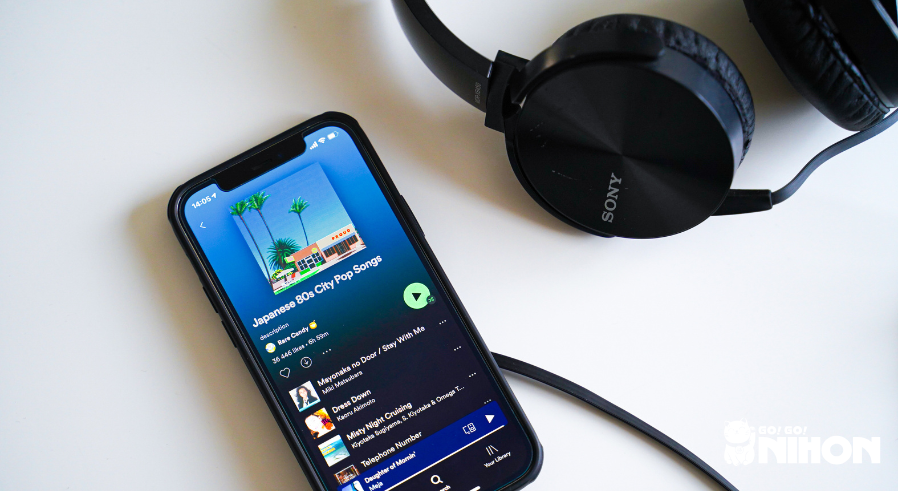
7. Music and podcasts as background immersion
Music and podcasts are the easiest way to fold Japanese practice into time you’re already spending doing something else, like commuting, exercising, or doing chores. Song lyrics are a genuinely useful listening challenge because they’re repetitive by design — a chorus you hear four times in one song is a chorus you get four chances to catch.
For music, artists like YOASOBI, Kenshi Yonezu, Fujii Kaze, and Aimyon are all hugely popular in Japan right now and tend to have clearly enunciated vocals, which makes them a good place to start with lyric transcription. For podcasts, “Nihongo con Teppei” is a well-known learner-focused option that’s easy to follow at a lower level. Once you’re ready to move to native content, Japanese radio programs like “All Night Nippon” or general-topic native podcasts on platforms like Voicy offer a bigger, more realistic listening challenge.
Vocabulary to learn
| Japanese | Reading | Meaning |
| 歌詞 | kashi | lyrics |
| 聞き取り | kikitori | listening comprehension |
| 番組 | bangumi | program/show |
| 出演者 | shutsuensha | cast/performers on a show |
| 作詞 | sakushi | lyric writing |
| 配信 | haishin | streaming/broadcasting |
Ways to practice
Try transcribing a chorus by ear as best you can before checking the real lyrics online, then compare what you got right. For podcasts, it’s worth eventually moving past shows made specifically for learners and into ones made for native Japanese listeners, even if you only catch part of it at first; the jump in speaking speed and vocabulary is exactly the kind of stretch that builds real listening stamina over time.
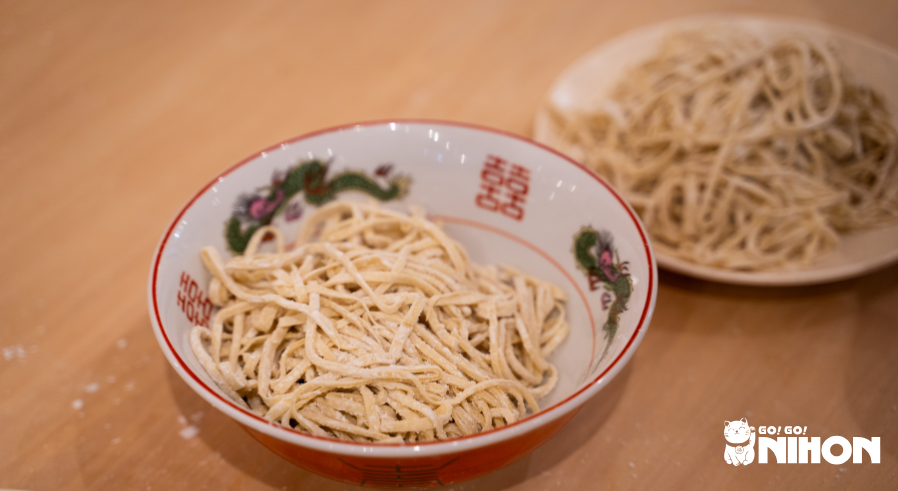
8. Recreate a Japanese summer at home
If you can’t be in Japan for matsuri season, you can still bring a piece of it to your own kitchen and living room. Cooking from a Japanese language recipe blog or video forces you to read and follow real instructions in Japanese, from ingredient lists to cooking steps, which is a different kind of practice than passive reading or listening.
Take it a step further by hosting a small matsuri night with friends: make festival-style food like takoyaki or yakisoba, write your own Japanese signage or menu for the “stall,” and put on a Japanese summer playlist in the background. It’s a low-pressure way to use vocabulary out loud in a social setting, even outside Japan.
Vocabulary to learn
| Japanese | Reading | Meaning |
| 夏祭り | natsu matsuri | summer festival |
| レシピ | reshipi | recipe |
| 手作り | tezukuri | handmade |
| 盛り付け | moritsuke | food plating/presentation |
| 屋台風 | yatai-fū | festival-stall style |
| 浴衣 | yukata | summer kimono |
Ways to practice
Cook a Japanese summer recipe from a Japanese language recipe blog or video, reading the instructions yourself instead of relying on a translated version. Host a small matsuri night with friends using Japanese signage or a menu you make yourself. Listen to Japanese music and/or put on a Japanese tv show or movie on in the background — perhaps a variety show?
FAQ
Do I need to be advanced to try these activities?
No. Most of these work at any level if you pick the right material — furigana-heavy manga, slice-of-life games, and graded readers are all beginner-friendly entry points, while native podcasts and unscripted variety shows offer a bigger challenge as you advance.
What’s the biggest difference between practicing with anime versus variety shows?
Anime is scripted, so the pacing and vocabulary are more predictable and easier to follow. Variety and reality shows are unscripted, with overlapping speech, fast reactions, and regional accents, which makes them a better test of real-world listening skills once you’re ready for it.
How much time should I spend on this kind of practice each day?
Even 20 to 30 minutes a day of focused, intentional practice can add up over a summer. Mixing input types (reading, listening, and speaking out loud) tends to be more effective than sticking to just one format.
Can this replace studying in Japan?
It’s a great way to keep building your Japanese while you’re not in Japan, but it can’t fully replace the immersion of daily life, classroom instruction, and real conversation you get from studying there. Many students use methods like these to maintain and build momentum before or between Study Trips.
How can Go! Go! Nihon help me take this further?
If this kind of practice has you thinking about studying Japanese more seriously, Go! Go! Nihon can help you find a language school in Japan and plan your move, so you can put everything you’ve picked up from anime, games, and books to use in real conversations. You can also take one of our online courses, which we designed with some of the top language schools and teachers in Japan, to work on increasing your Japanese knowledge.
If you’d like to find out more about coming to Japan to learn Japanese, don’t hesitate to contact us. And check out our blog to read more about learning Japanese and living in Japan.