Skip to content


Living in Japan is a dream for many people — but figuring out how to make it happen can feel overwhelming. It takes hard work to turn that dream into a reality; the visas, costs, bureaucracy, admin, and language barrier, etc., create a lot of hurdles for you. There’s a lot of information out there, and not all of it is clear.
This FAQ-style guide answers the most common questions we receive at Go! Go! Nihon from people who want to study Japanese and build a life in Japan. Whether you’re just starting to explore your options or getting ready to apply, this article will help you understand what to expect and how to prepare.
I want to live in Japan. What is the best way?
There are many ways to live in Japan, depending on your goals and circumstances. Some people come for short stays on working holiday visas, while others move to Japan on a work visa.
At Go! Go! Nihon, we specialize in helping people come to Japan on a student visa, which allows you to stay in the country from six months up to two years while studying Japanese at a language school.
For many people, this is the most accessible and flexible way to move to Japan. A student visa gives you time to build strong Japanese skills, experience daily life in Japan, and meet classmates from all over the world. Studying abroad in Japan is one of the best ways to learn Japanese.
I’m over 30 years old. Am I too old to study in Japan?
Not at all. The minimum age requirement to study at a Japanese language school is 18, but there is no upper age limit. Many language schools welcome students in their 30s, 40s, and even 50s.
If you’re motivated to learn Japanese and experience life in Japan, your age will not prevent you from studying here.

What is the best school to learn Japanese?
There is no single “best” Japanese language school — the right school depends on your goals, learning style, and personality.
Some schools focus on preparing their students for higher education in Japan, while others emphasize career-focused Japanese for those who want to find full-time work. Class intensity also varies: some programs are fast-paced and require significant self-study, while others offer a lighter workload and more free time.
This is why choosing the right school matters, and why many choose to work with Go! Go! Nihon to find a school that truly fits their needs.
I’ve never studied Japanese before. Can I still go?
Yes, but there’s an important requirement to be aware of.
Student visa applicants are generally expected to have a basic level of Japanese ability. In the past, evidence of around 150 hours of study could be used as proof. As of the October 2026 intake, immigration has changed the requirements. Applicants are now typically expected to demonstrate their level through an official exam result (such as JLPT N5 or equivalent) or by completing a school assessment/interview. Please note that some schools may require both.
If you have a university degree, you may be exempt from some of these requirements. However, this depends on the school’s internal policies, and some may still request official proof from all applicants.
How much does Japanese language school cost?
Tuition fees vary depending on the school and location. As of January 2026, Japanese language school tuition typically ranges from: 400,000 to 550,000 yen for six months
This amount usually covers classes only. Additional costs, such as housing, textbooks, and living expenses, should be planned separately.
How expensive is living in Japan?
The cost of living in Japan depends on several factors, including your city, housing type, and lifestyle. You’ll need to budget for tuition, rent, food, transportation, and daily expenses.
As a general rule, we recommend having at least 1.2 million yen for every six months in Japan. This is also the amount Japanese immigration recommends when reviewing student visa applications.
What is a financial sponsor? Do I need one?
When applying for a student visa, you must provide proof that you can financially support yourself during your studies. This proof is submitted through a financial sponsor.
You can either:
- Self-sponsor, using your own savings, or
- Ask a direct relative (such as a parent or guardian) to sponsor your application
Your sponsor’s role is simply to show immigration that you have sufficient financial support while studying in Japan.
Can I work while studying in Japan?
Yes. Students on a student visa can work part-time for up to 28 hours per week, as long as they receive permission to work.
However, part-time work is usually not enough to cover all living expenses in Japan. We strongly recommend arriving with sufficient savings and viewing part-time work as supplemental income rather than a primary source of support.

What are classes like at Japanese language school?
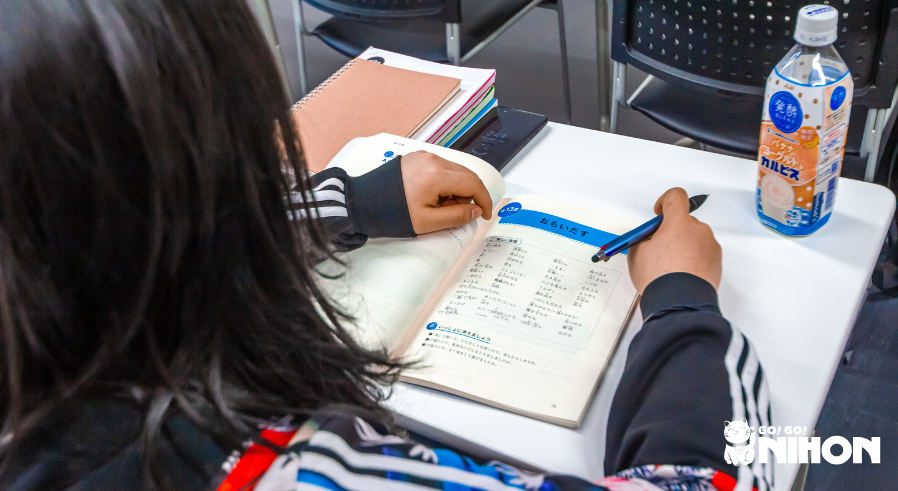
Most language schools offer three to four hours of classes per day, Monday to Friday. Classes are typically held either in the morning or in the afternoon.
Courses usually include:
- Grammar
- Vocabulary
- Kanji
- Conversation
Some schools also offer elective classes, such as Japanese history, culture, or arts, giving students a more well-rounded learning experience.
How long can I stay in Japan on a student visa?
The maximum length of stay on a student visa is two years, but this depends on the course and the term you apply for.
What can I do after finishing Japanese language school?
After completing language school, there are several possible pathways, including:
- Enrolling in higher education in Japan
- Finding a full-time job and switching to a work visa
Your options will depend on your qualifications, Japanese ability, and career goals. For example, without a higher education degree, obtaining a work visa can be challenging.
Planning ahead is key, and many start preparing for their next step well before graduating from language school.
How long does it take to become fluent in Japanese?
Most language schools offer two-year programs because that’s typically how long it takes for students to progress from beginner level to JLPT N2.
JLPT N2 is the level generally required for Japanese universities and many full-time jobs. That said, language learning varies greatly depending on the individual, their study habits, and the pace of their school.

Will I have healthcare in Japan?
Yes. Individuals on a student visa are considered official residents of Japan and are eligible to enroll in Japan’s National Health Insurance.
National Health Insurance is affordable and covers a large portion of medical costs, making healthcare in Japan both accessible and reliable for anyone.
I have depression, anxiety, or another mental health condition. Can I still study in Japan?
Yes, but applications are reviewed on a case-by-case basis.
Language schools may ask for a medical report and conduct an interview to better understand your situation. This helps schools confirm that they have the resources needed to support you during your studies.
Being open and honest during the application process is important to ensure a safe and positive experience in Japan.
Should I study in Tokyo or in the countryside (inaka)?
There’s no right or wrong answer: it depends on your personality and goals.
Tokyo offers convenience, part-time job opportunities, and a fast-paced lifestyle. The countryside (inaka) offers deeper cultural immersion, quieter surroundings, and often lower living costs.
Some people thrive in the energy of a big city, while others prefer a slower pace that encourages full language immersion. The best choice is the one that fits your lifestyle.
Ready to start your journey?
Studying Japanese in Japan is a life-changing experience, and there’s no single path that works for everyone. With the right planning and support, you can choose the option that best matches your goals.
If you’re ready to take the next step, Go! Go! Nihon is here to help guide you through the process, from choosing a school to applying for your student visa.
Feel free to contact us and to check out the blog to learn more.