 Skip to content


Updated December 2025
When you arrive in Japan, one of the must-haves for a seamless and convenient trip is a prepaid all-in-one IC card such as Suica or PASMO. IC cards in Japan are a game changer for students and travelers alike, making sightseeing, payments, and exploring Japan much easier. With these cards, you can bid farewell to the hassle of purchasing individual tickets for each train or bus ride.
Moreover, they offer the added advantage of serving as cashless payment methods at many stores and vending machines, enhancing your overall convenience during your stay.
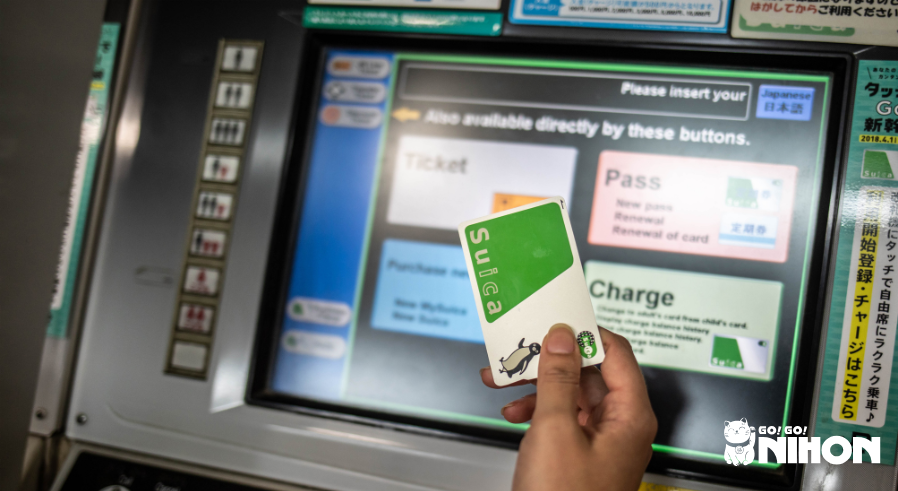
Where can you buy IC cards in Japan?
Welcome Suica card in Japan for tourists
If you are a traveler, there is a special IC card in Japan only available to visitors from overseas, the Welcome Suica. From March 27, 2025, Welcome Suica are sold at the following locations:
- JR EAST Travel Service Center — Narita Airport Terminal 1 Station, Narita Airport Terminal 2・3 Station, Haneda Airport Terminal 3 (Tokyo Monorail) Station, Tokyo Station, Shibuya Station, Shinjuku Station, Ikebukuro Station, Ueno Station, Yokohama Station, Sendai Station
- Welcome Suica Ticket Vending Machines — Narita Airport Terminal 1 Station, Narita Airport Terminal 2・3 Station, Haneda Airport Terminal 3 (Tokyo Monorail) Station
- JAPAN RAIL CAFÉ TOKYO
- TAKANAWA GATEWAY Travel Service Center
On March 6, 2025, JR East released the Welcome Suica Mobile App, which lets visitors purchase the Welcome Suica digitally without having to visit a ticket office. It includes the use of Shinkansen e-tickets and purchase of Limited Express tickets as well. Green Car seats on local trains will be available for purchase in spring 2026.
The Welcome Suica is rechargeable and can be used for up to 28 days throughout the entire country. Please note that Android users will not be able to download or use the app.
IC cards for mobile phones and smartwatches
Another possibility is to add one of the IC cards in Japan to your smartphone or smartwatch. Language school students or travelers planning to stay longer than 28 days should consider this option. The mobile IC card works the same as a physical one, with the added convenience of having it on your device!
For iPhone users, open the Wallet app, choose “Add,” select “Transit Card,” pick Suica or PASMO, enter your desired amount, and confirm. Apple Watch users follow similar steps. Android users, ensure NFC and contactless payments are on in settings, then use Google Pay to add the card. Instantly recharge your mobile IC card through the app. If needed, cash top-ups are available at designated train station ticket machines offering “contactless” recharge options. However, please note that Android users might have a harder time to obtain this, as Japanese-designed apps tend to prefer Apple devices.
Note: Some Android phones purchased outside of Japan do not have an NFC chip inside, and users are unable to download the IC card app. In this case, we recommend purchasing a Welcome IC card for your travels.
How do IC cards in Japan work?
The IC cards in Japan are contactless smart cards that act as prepaid electronic money and fare cards used throughout the country. Once the card is charged, you can use it anywhere it is accepted by scanning it over a machine. When the transaction goes through, the card reader shows you how much you have left on your card.
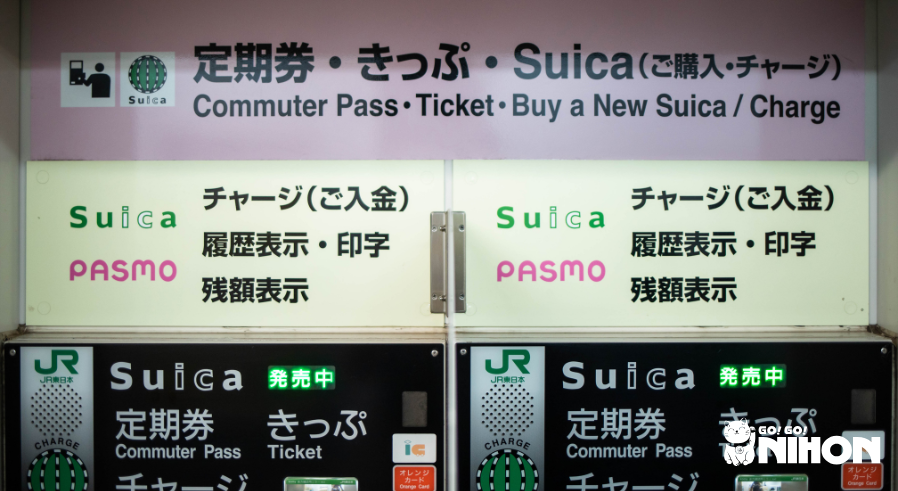
For the train system, you scan the card at the ticket gate when you enter, depart, and when you change lines, if applicable. If you don’t have enough money left on the card for your train fare, don’t panic! There’s always a charging machine nearby to top up. If something is wrong with your card, you can always go see the station staff at the window next to the machines.
Some stores inside and around train stations, many konbini, vending machines, and other stores accept payment with these prepaid IC cards in Japan. Taxis and buses also accept these cards for payment.
Different IC cards depending on the region
All the major regions in Japan have different IC cards: Suica and PASMO in Kanto; Icoca and PiTaPa in Kansai; Kitaca in Hokkaido; Toica and Manaka in Chūbu; Hayaken, Nimoca, and Sugoca in Kyushu; etc. Before, it was necessary to buy different cards when traveling around Japan, however, since 2013, the cards are all compatible with each other, so whichever one you get, you can use it everywhere in Japan.
Alternatives for IC cards in Japan
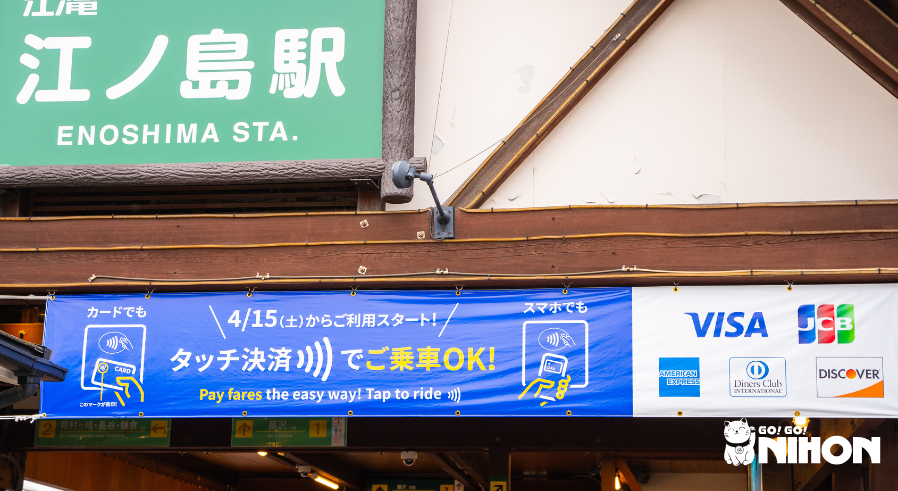
If you can’t get a Welcome Suica card at the airport — or you prefer not to use a mobile IC card — there’s now another option. Since 2023, many Japanese railway companies have been rolling out tap-to-pay ticket gates that let you ride by simply tapping a compatible credit or debit card, or a smartphone with contactless payment enabled.
This system is growing quickly in major urban areas such as Kansai (Nankai, Kintetsu, Hankyu, Hanshin, Osaka Metro) and parts of Tokyo (including Toei Subway and some Keikyu stations). Several operators in Kyushu have also introduced it. However, tap-to-pay is not yet available everywhere, and major networks like JR East still rely mainly on traditional IC cards like Suica and Mobile Suica.
Important to note, Tokyo Metro is planning to accept contactless payments at all stations by 2026.
Because adoption differs by company and even by station, be sure to check whether the specific lines and stations you plan to use support tap-to-pay. It’s also important to note that not all international cards work — some systems only support certain brands, and a few early rollouts have been limited to Japan-issued cards. If you plan to rely on tap-to-pay, it’s a good idea to confirm with your bank that your card supports overseas contactless transit payments in Japan.
Tap-to-pay also usually covers standard fares only, meaning you’ll still need separate tickets for Limited Express trains, airport express services, or the Shinkansen.
As rollouts continue through 2025 and beyond, tap-to-pay is becoming a convenient alternative for some travelers. However, for the most reliable experience — especially if you’ll be moving between different regions or rail companies — we still recommend using an IC card (physical or mobile) whenever possible. This remains the most widely accepted and hassle-free way to ride trains across Japan.
For more tips about living in Japan keep following our Go! Go! Nihon blog.


