Skip to content


Planning a Study Trip to Japan often starts with a confusing Google search about types of visas in Japan. You see terms like “student visa,” “general visa,” and “temporary visitor,” and it’s hard to know which one fits our three-week courses. Japanese immigration law is strict, but for our short-term academic trips, the rules are different from those for long-term residency.
Many students assume they need a “student visa” (with a COE) for any study program. Our two to four week Study Trips only need a “temporary visitor” or “tourist” visa. This guide breaks down the specific Japan visa requirements you need, who gets in with visa-free entry, and how to handle the paperwork if you don’t.
Key takeaways
- The “student visa” need: For courses under 90 days, you can legally enter as a “temporary visitor,” and do not require a “student visa.”
- The three pathways: Your entry depends on your nationality: visa waiver (exempt), eVISA, or standard sticker visa.
- Essential documents: Non-exempt nationals will need an invitation letter, which Go! Go! Nihon guarantees for participants.
- Strict timelines: Some “visa free” countries only get 15 days, which is too short for a four-week course without a special application.
- Remote work rule: You cannot work in Japan with a temporary visa.
What kind of visa do I need for a Study Trip? (The 90-day rule)
For a Study Trip lasting less than 90 days, you generally do not need a formal long-term “student visa”; instead, you will utilize the “temporary visitor” status.
The formal “student” status (ryūgaku) is reserved for long-term academic pursuits, typically exceeding three months. It requires a Certificate of Eligibility (COE), a complex process that takes months to complete.
The temporary visitor status (tanki-taizai) is explicitly designed for stays of up to 90 days. Permitted activities under this status include tourism, visiting relatives, and, significantly, “study” and “participation in short courses.” Therefore, if you are joining us for a two to four week course, you are legally a visitor who is studying, not a resident student.
| Feature | Student visa (ryūgaku) | Temporary visitor (tanki-taizai) |
| Course length | Long term (six months – two years) | Short term (Up to 90 days) |
| Requires COE? | Yes (Mandatory) | No (Not applicable) |
| Can you work? | Yes (up to 28 hrs/week with permit) | No (Strictly prohibited) |
| Best for… | University degrees, long language courses | Study Trips, summer courses, short courses, tourism |
Did You Know? The “student” residence status is strictly for long-term courses (usually six months+) and requires a Certificate of Eligibility (COE) which takes months to process.
Further Reading: Check out our guide on how much a Study Trip costs to plan your budget.
Path A: the visa waiver countries (exemption)
If you hold a passport from one of the 74 exempted countries (like the US, UK, Canada, or EU members), you do not need to apply for a visa in advance.
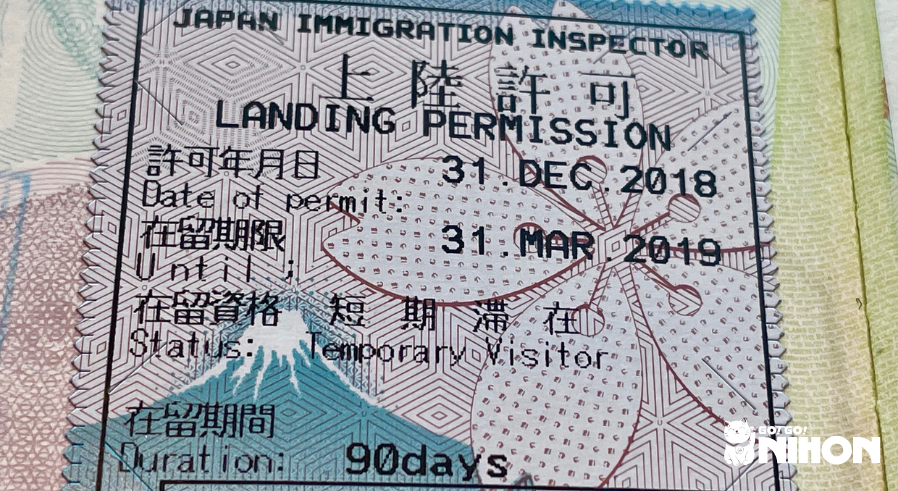
Japan maintains visa exemption arrangements with 74 countries and regions. If you are from one of these regions, you are automatically granted a “temporary visitor” landing permission upon arrival at the airport. You do not need to visit an embassy beforehand.
However, exemption does not mean zero requirements. You must still hold a passport valid for your entire stay and, crucially, be able to present a confirmed return ticket if asked by an immigration officer.
Common visa waiver countries:
- United States
- Canada
- United Kingdom
- Australia
- New Zealand
- European Union members
- South Korea
- Taiwan
- Hong Kong
Further Reading: Learn more about our popular summer course which fits perfectly within the 90-day limit.
Path B: the “restricted” waiver group (warning for four-week students)
While most visa-exempt visitors receive a 90-day stay, some nationalities are restricted to only 15 or 30 days. If your course plus travel time exceeds this limit, you must apply for a standard visa.
Most “visa waiver” countries are automatically granted a 90-day landing permission. However, this is not a universal rule. Some specific visa-exempt nations fall into a restricted duration group with limits of 15 or 30 days.
This is a critical detail for any student planning to join our four-week courses. A four-week course often spans 28-30 days. If your nationality is limited to 30 days and you arrive just one day early or leave one day late, you would be overstaying your visa illegally.
Recommendation: Before booking, check the official Ministry of Foreign Affairs website to confirm the exact number of days granted to your passport. If your Study Trip itinerary exceeds that limit, you cannot use the automatic visa exemption and must apply for a standard temporary visitor visa (Path C) to secure a longer stay.
Note: Japan plans to introduce JESTA (Japan Electronic System for Travel Authorization) from around 2028, which will require travelers from visa-exempt (including restricted waiver) countries to complete an online pre-travel authorization before departure. JESTA is not a visa, but an additional screening step for those entering Japan visa-free as temporary visitors.
Path C: eVISA applications (for non-exempt nationals)
If you are from a non-exempt country, you must apply for a temporary visitor visa using documents provided by your host school, such as the invitation letter and schedule of stay.
If you are not from a visa-waiver country, you must apply for a visa before you travel. The success of this application relies heavily on proving your “purpose of visit.” To do this, you need two critical documents from your host in Japan:
- Invitation letter (shōhei-riyū-sho)
- Schedule of stay (taizai yoteihyō)
Most Japanese language schools will not issue these documents for short-term students who apply directly. However, Go! Go! Nihon guarantees these documents for all participants in our Study Trip packages, solving the biggest hurdle in the application process.
eVISA vs. sticker visa
Some nationals residing in specific regions may be eligible for the Japan eVISA. However, the eVISA is strictly single entry. If you plan to take a weekend trip to a neighboring country during your study tour, you would exit Japan and be unable to return.
In this case, you must apply for a traditional “double entry” sticker visa instead.
Further Reading: See how we help you secure your spot in our Student Booking Process Guide.
Checklist for temporary visa application (non-exempt nationals)
If you are not from a visa-waiver country, you must apply for a “temporary visitor visa” (NOT a “student visa”) to enter Japan for your Study Trip.
This is the specific legal status that allows for short-term stays of up to 90 days for activities including sightseeing and short courses. Do not apply for a long-term “student visa,” as that requires a Certificate of Eligibility (COE) which is not issued for short trips.
Successful applications for this visa rely on three pillars of documentation:
1. Identity & travel intent
- Passport: Must be valid for your entire stay and have at least two blank pages.
- Visa application form: A signed official document.
- Photo: Japan requires a unique 45mm x 45mm square size. Avoid using standard backgrounds that are grey or blue.
2. Purpose of visit
- Invitation letter: A critical document issued by Go! Go! Nihon that proves why you are visiting.
- Schedule of stay: A daily breakdown of your classes, accommodation, and contact numbers.
3. Financial solvency
- Bank statements: You must prove that you can afford the trip without working.
Can I work during my Study Trip? (the remote work reality)
You are strictly prohibited from working in Japan on a temporary visitor visa, but incidental remote work for your home country’s company is generally accepted.
The temporary visitor status strictly prohibits “remunerative activities” involving a Japanese source. You cannot take a part-time job in a cafe or freelance for a Japanese client.
However, Japan generally tolerates “digital nomad” style work — checking emails or finishing a project for your employer back home — as long as it is incidental to your visit and paid into a foreign bank account.
Did You Know? Never list “work” or “remote work” on your landing card at the airport if it is not your main purpose of travel. Check “tourism” or “short-term study” as your purpose of visit to avoid confusion and potential denial of entry.
Further Reading: Read our Professional’s Guide to Short-Term Programs for more on balancing work and study.
What to expect at immigration at the airport?
When you land in Japan, you will go through a specific procedure to get your landing permission sticker.
- The queue: Follow signs for “Foreign Passports.”
- Biometrics: You will be asked to place your index fingers on a scanner and look at a camera for a photo.
- The question: The officer may ask, “What is the purpose of your visit?”
- Correct answer: “Sightseeing and a short culture course.”
- Documents: Have your return ticket and school enrollment/invitation printed and ready to show if asked.
- The sticker: The officer will place a “temporary visitor” sticker in your passport. Check the date immediately to ensure it covers your full stay (usually 15, 30, or 90 days).
FAQ on types of visas in Japan
- What is considered a short-term stay in Japan?
A stay of up to 90 days is considered short-term. This status covers tourism, business meetings, visiting friends, and short study courses. - How to count the intended length of stay in Japan?
The count typically starts the day after arrival. So if you arrive on the 1st, Day 1 of your permitted stay is the 2nd. Always check the stamp in your passport to be sure. - What are the requirements when entering Japan?
You need a valid passport, a confirmed return ticket (or proof of onward travel), and, for students, it is wise to carry your proof of enrollment or invitation letter. - Can I extend my 90-day tourist visa?
Generally, no. However, for nationals of countries with specific bilateral visa exemption arrangements permitting stays of up to six months, it is possible to apply for an extension of the period of stay at the Regional Immigration Bureau (Ministry of Justice) before the initial permitted stay expires. - Do I need a student visa for language school?
Only if the course is longer than 90 days. For our two to four week Study Trips, the “temporary visitor” status is the correct and legal classification.
In summary: is studying in Japan right for you?
Understanding the types of visas in Japan is the first step to a stress-free adventure. Most students will enter easily as a “temporary visitor,” but those from non-exempt countries need to secure their invitation letter early. Whether you are here for two weeks or four weeks, ensuring you have the right documents allows you to focus on what matters: learning Japanese and exploring the culture.
Check out our upcoming Study Trip dates to secure your spot and follow our blog to learn more about life in Japan.