Skip to content

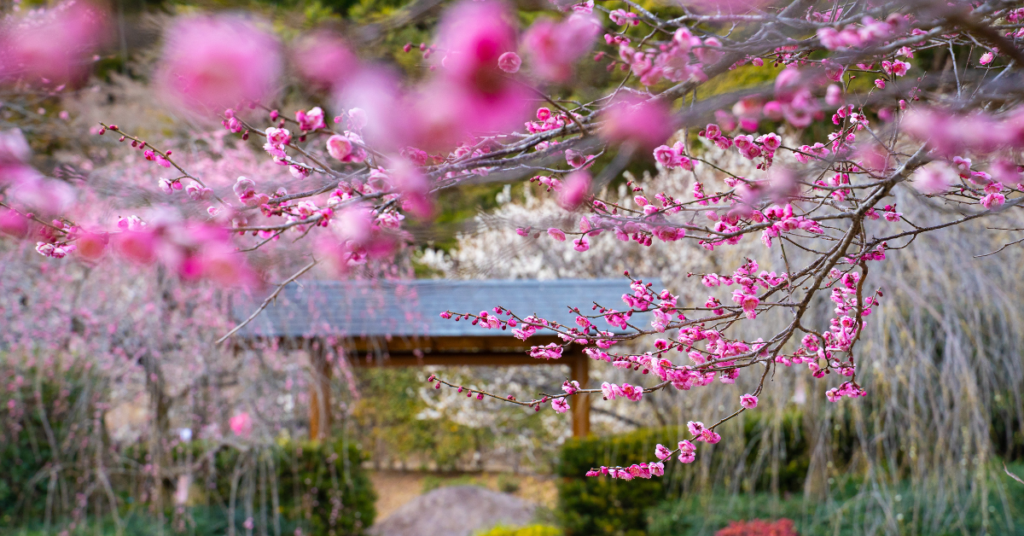
When most people picture Japan in bloom, they picture sakura — those pale pink clouds of cherry blossoms that flood every social media feed each spring. And yes, sakura season is every bit as magical as it looks. But here’s something a lot of people don’t know: cherry blossoms aren’t the first flowers to bloom in Japan each year.
Before the cherry trees wake up, Japan has already been celebrating another blossom entirely. One that’s arguably just as beautiful, deeply rooted in Japanese history, and accompanied by some of the best food and drink you’ll find at any season. We’re talking about ume (梅), or plum blossoms in Japan.
If you’re moving to Japan in January for language school, or just visiting during this time of year, ume season is a pretty spectacular welcome. Let’s take a closer look at what ume actually are, how they differ from sakura, their fascinating place in Japanese history, and what to do (and eat) when the plum trees start to bloom.
What are plum blossoms? (And are they actually plums?)
Ume are the blossoms of the Japanese plum tree, known botanically as Prunus mume. Despite the name, the ume tree is actually more closely related to apricots than to the Western plums you’d find in a supermarket. The fruit it produces in summer — also called ume — is small, tart, and used in all sorts of traditional Japanese foods and drinks.
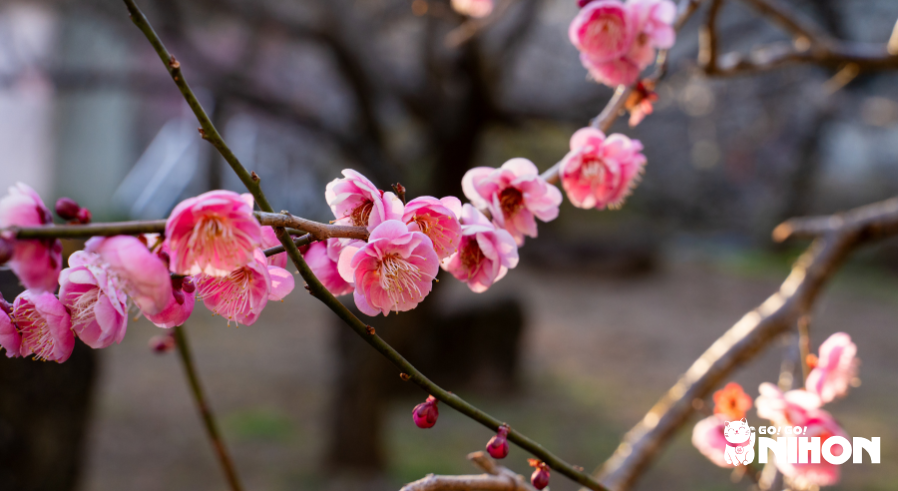
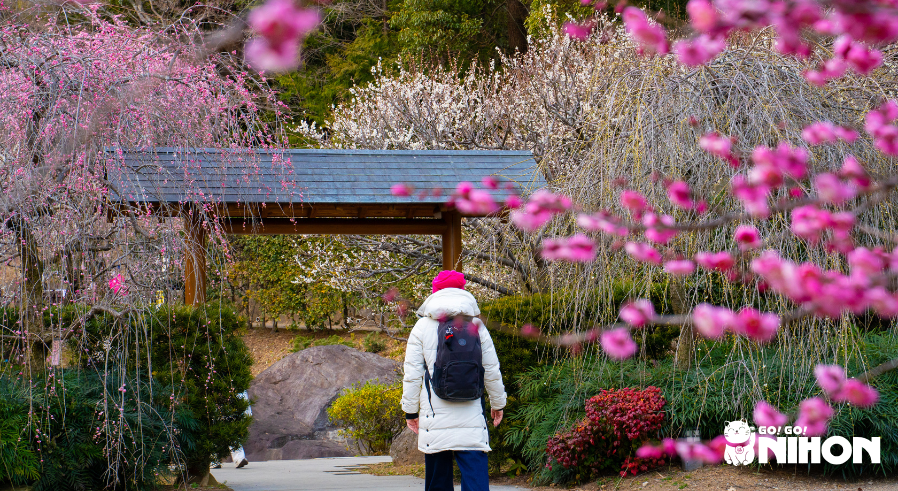
But it’s the flowers that everyone falls for. Ume blossoms come in white, soft pink, hot pink, and deep crimson-red depending on the variety, and unlike cherry blossoms, many ume flowers have a genuinely intoxicating fragrance that’s sweet, warm, and welcoming on a brisk winter’s day.
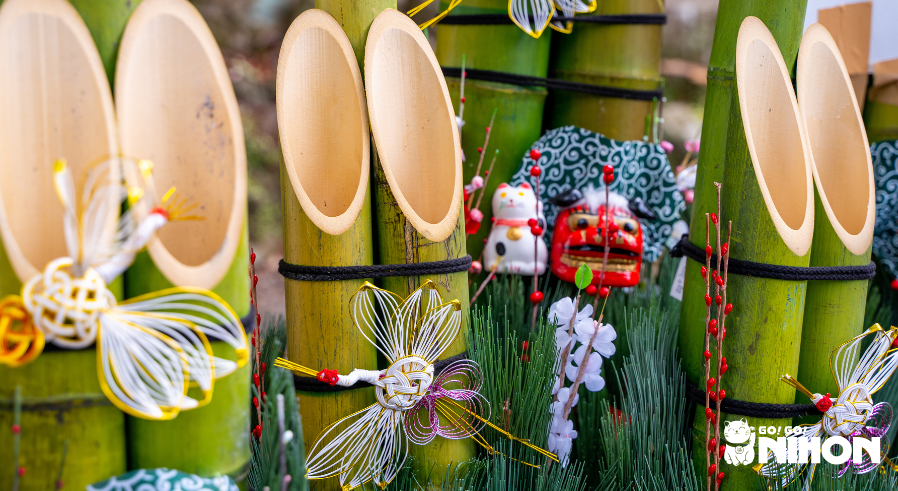
In East Asian art and poetry, ume holds a special place as one of the “Three Friends of Winter” (歳寒三友, saikan san’yū) alongside bamboo and pine. The three plants are celebrated for enduring the cold when everything else around them has died. You can see them featured in the kadomatsu (門松) decorative pillars for Japanese New Year.
Ume trees were originally introduced to Japan from China (possibly via the Korean peninsula) well over 1,500 years ago, arriving alongside Buddhism, Chinese poetry, and the broader influence of Tang dynasty culture. They literally took root and never left.
What’s the difference between plum blossoms and cherry blossoms?
These two flowers are genuinely easy to mix up, especially when you’re new to Japan. Let’s break it down both culturally and practically.
The cultural difference
Most people think of sakura (桜, cherry blossoms) as the flower of Japan. Sakura is Japan’s national floral symbol — associated with spring, new beginnings, and the concept of mono no aware (物の哀れ), that bittersweet awareness of how fleeting beautiful things are. But here’s the thing: ume was here first.
Back in the Nara period (710–794 AD), when Japan’s imperial court was deeply influenced by Chinese culture and aesthetics, ume was the flower of prestige. Court poets wrote about it. Nobles planted it. It was the blossom. Sakura only began to overtake ume in cultural significance during the Heian period (794–1185), as Japan began developing a more distinctly Japanese cultural identity, separate from its Chinese influences.
While sakura is associated with impermanence and the rush of spring, ume carries a different energy: resilience. It blooms in the cold, sometimes even pushing through snow. It’s the flower that says winter is almost over. In Japan, ume is strongly linked to good luck, protection, and perseverance, which is why ume trees are so commonly planted at Shinto shrines, particularly those dedicated to the scholar-deity Tenjin.
How to tell ume and sakura apart
If you’re standing in front of a blossoming tree in Japan and you’re not sure what you’re looking at, here are the quickest ways to tell:
Timing. This is your first and easiest clue. Ume blooms from roughly late January through early March, while sakura typically arrives from late March through April. If you’re looking at blossoms in February, you’re almost certainly looking at ume.
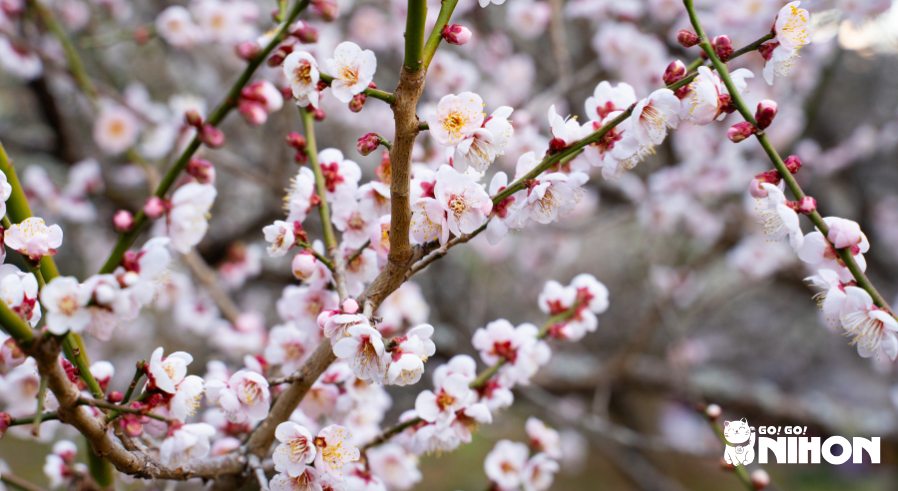
Petal shape. Look closely at the petals. Ume petals are round and full, like little circles. Sakura petals have a distinctive notch or split at the tip, giving them a slightly heart-like shape. Once you know this, you’ll never mix them up again.
How they fall. Sakura petals famously drift off one by one in the breeze, creating that iconic “snow” effect. Ume petals tend to fall whole — the whole flower drops at once, rather than breaking apart.
Fragrance. If the tree smells incredible, it’s ume. Sakura has very little scent — the sakura flavor and scent that is peddled during sakura season is actually fake.
Flowers on branches. Ume blossoms grow directly attached to the branch with almost no stem at all. Sakura blossoms dangle in clusters on longer stems, giving them that characteristic drooping, cloud-like look.
Color. Ume tends toward deeper, richer pinks and reds as well as clean white. Sakura is almost always very pale pink or white.
Quick tip: when in doubt, lean in and sniff. If it smells incredible, it’s ume.
A brief history of plum blossoms in Japan
It’s hard to overstate how deeply ume is woven into Japanese cultural history. To give you a sense of it: Japan’s oldest poetry anthology, the Man’yōshū (万葉集), compiled around 759 AD, contains over 100 poems about ume. Sakura? About 40. For centuries, ume wasn’t just a flower — it was the flower, the one that moved poets, inspired painters, and graced the gardens of emperors.
Ume arrived in Japan from China during the Nara period, traveling the same routes as Buddhism, Chinese script, and Tang dynasty art. It was embraced immediately and enthusiastically, planted in imperial gardens and celebrated in verse as a symbol of elegance and refined taste.
The shift came gradually during the Heian period, as Japanese court culture began to develop its own distinct aesthetic sensibility. The gentle, fleeting beauty of sakura — blooming quickly and falling even quicker — resonated more deeply with the emerging Japanese concept of mono no aware. Ume didn’t disappear, but it stepped aside as the principal symbol of spring.
One of the most beloved figures associated with ume is Sugawara no Michizane (845–903), a renowned scholar and court official who was later deified as Tenjin, the god of learning. Michizane famously adored ume, and when he was unjustly exiled from Kyoto to Dazaifu in Kyushu, legend has it that his beloved plum tree missed him so much it flew through the air to be at his side — a story celebrated as the Tobiume (飛び梅, “flying plum”). To this day, the ume blossom is the symbol of Tenjin shrines across Japan, and the shrine at Dazaifu in Fukuoka is one of the most spectacular places in the country to see plum blossoms in season.
By the Edo period (1603–1868), ume viewing had become a popular leisure activity for ordinary people, not just the nobility. Ume groves were planted at famous gardens and public spaces across the country, and umemi (the practice of gathering to appreciate plum blossoms) became a beloved seasonal tradition.
Today, ume remains embedded in Japanese life in ways that go far beyond the aesthetic. It shows up in food, medicine, folk remedies, shrine culture, and seasonal ritual. And every year, when the first ume trees begin to bloom in January, Japan collectively breathes a sigh of relief: spring is coming.
When is ume season?
One of the best things about ume season is that it’s not a single moment — it rolls across Japan gradually from south to north over the course of several weeks. In the warmest spots, like Atami in Shizuoka Prefecture, ume trees can begin blooming as early as late December or January. In cooler regions, peak bloom might not arrive until February or early March.
Unlike sakura season, which gets tracked obsessively by weather services, TV networks, and every major news outlet in Japan, ume season tends to be a little quieter and more personal. There are dedicated ume forecasts and local festivals, but the crowds are generally smaller and the atmosphere is more relaxed.
The viewing tradition itself is called umemi (梅見, ume viewing) and it has a lot in common with the more famous hanami (花見, cherry blossom viewing) but with a more low-key, contemplative feel. You’re less likely to encounter tarps and convenience store snacks; umemi tends to involve a leisurely walk through a shrine garden, warm drinks in hand, taking in the fragrance and the sight.
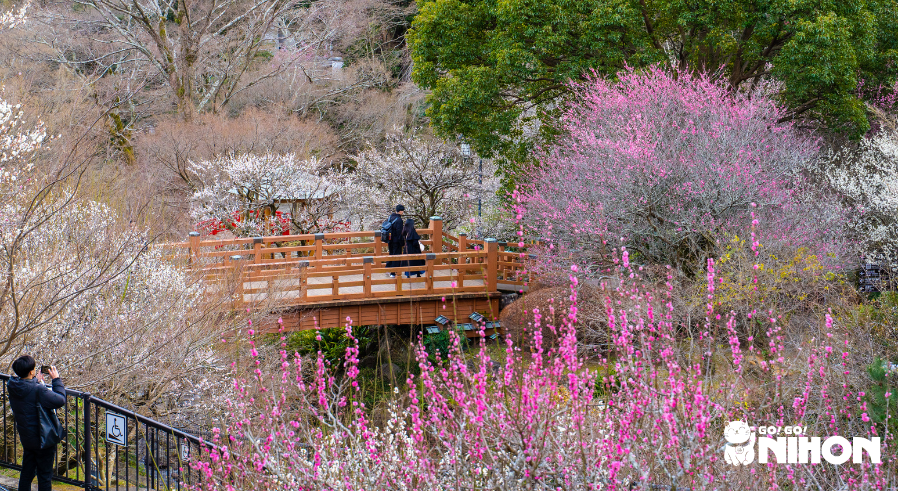
Some of the most beautiful places to experience plum blossoms in Japan
Kairakuen (備楽図), Mito, Ibaraki. One of Japan’s three great gardens, Kairakuen is famous for its 3,000 ume trees representing around 100 varieties. Every year it hosts the Mito Plum Festival (Mito no Ume Matsuri), one of Japan’s largest ume festivals.
Yushima Tenjin (湯島天神), Tokyo. Right in the heart of Tokyo, this beloved Tenjin shrine hosts a popular plum festival in February. It’s a magical spot with a sea of blossoms in the middle of the city, and all the energy of an urban festival around it.
Kitano Tenmangu (北野天満宮), Kyoto. One of the most important Tenjin shrines in Japan, Kitano Tenmangu has a stunning ume grove and a deeply special atmosphere during blossom season. The connection to Sugawara no Michizane makes this one feel particularly meaningful.
Atami Baien, Shizuoka. One of Japan’s oldest plum gardens, Atami Baien is the place to go if you want to catch ume blossoms as early as possible.
If you’re based in a Japanese city, you almost certainly won’t need to travel far to see the beautiful plum blossoms. Ume trees are planted in parks, temple grounds, and residential streets across the country. Part of the joy of ume season is stumbling across a beautiful tree on your walk to school or the station, stopping for a moment, and feeling very glad to be in Japan.
Ume treats: everything delicious to try
Here’s where ume really earns its keep. While sakura-flavored food is largely a seasonal novelty, ume-flavored things are genuinely delicious. They’re also part of everyday Japanese food culture year-round, not just in bloom season.
Here’s your essential ume food and drink guide:
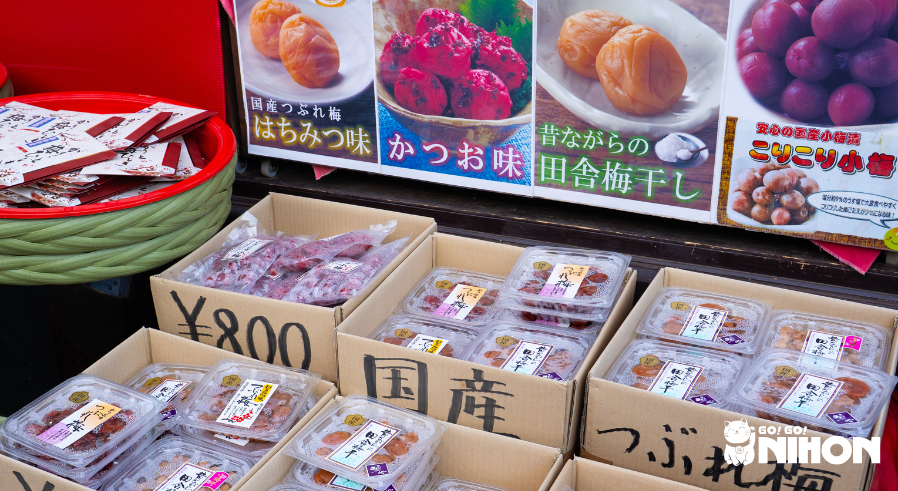
- Umeboshi (梅干し). The classic. Umeboshi are pickled ume plums — intensely sour, very salty, and deeply savory. They’re one of the most fundamental flavors in Japanese cuisine, tucked into the center of onigiri (rice balls), served alongside rice in bento boxes, or dropped into a cup of green tea as ochazuke. They’ve been eaten in Japan for over a thousand years as a preservative food and folk remedy. They keep forever. They go with everything.
- Umeshu (梅酒). Plum wine, or more accurately plum liqueur. Umeshu is made by steeping unripe ume in shochu with rock sugar, and the result is sweet, syrupy, fruity, and utterly drinkable. It’s one of the most popular drinks in Japan, served on the rocks, topped with soda water, or straight. Many families make their own at home. If you’re new to Japanese alcohol, umeshu is a wonderful place to start.
- Ume candy and snacks. You’ll find these at every convenience store and souvenir shop in Japan: hard ume candies, chewy ume gummies, ume-dusted crackers, ume-flavored konpeito (those tiny sugar stars). They range from fiercely sour to sweetly mellow.
- Wagashi (和菓子) in ume shapes. During ume season, traditional Japanese confectionery shops go all-in on ume-shaped and ume-flavored sweets. Look for delicate mochi and nerikiri molded into five-petaled ume flowers. They’re almost too beautiful to eat. Almost.
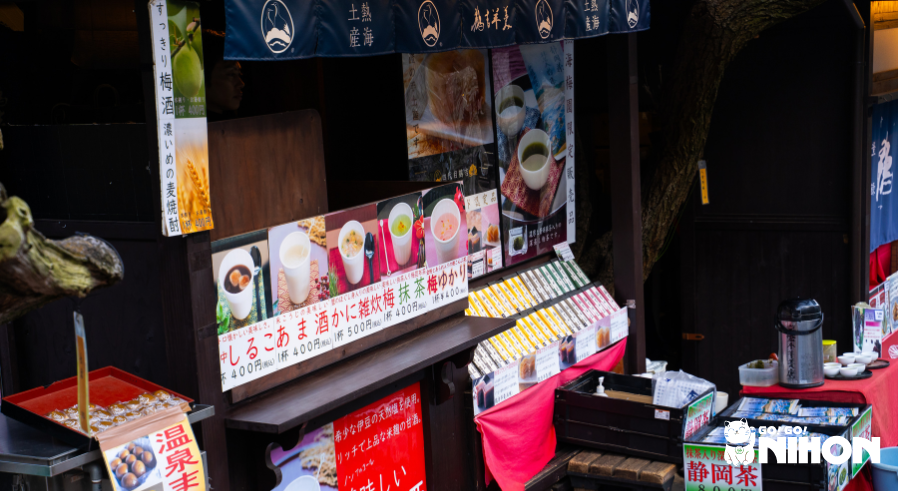
- Ume syrup and juice. Non-alcoholic ume syrup (梅シロップ) mixed with sparkling water is one of Japan’s loveliest soft drinks — tart, refreshing, and subtly floral. During ume festivals, you might also find ume-flavored soft serve, ume daifuku, and other seasonal treats very much worth seeking out.
Omiyage tip: if you’re sending gifts home or bringing something back for classmates, umeboshi and ume candy are safe, beloved picks. Umeboshi in particular travels well and makes a genuinely interesting gift — though fair warning, the reaction from people who’ve never tasted one before is always entertaining.
Ume season as a local: what to expect when you first arrive
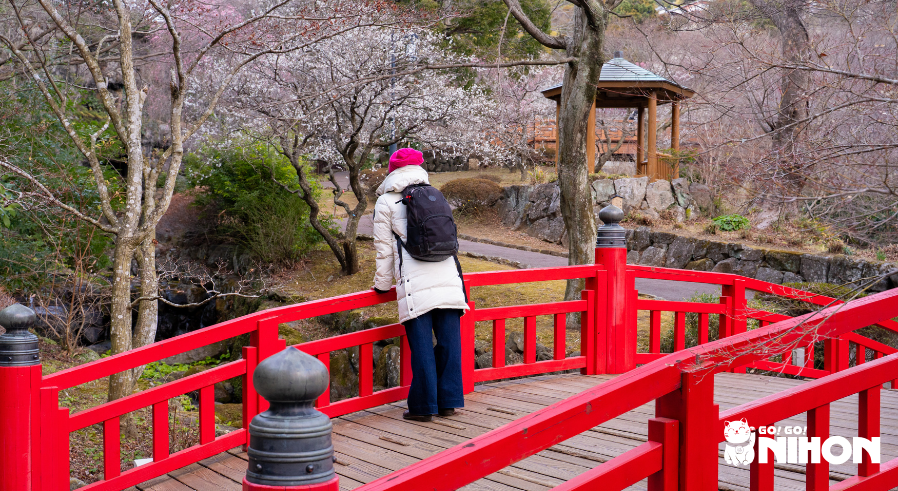
Many language schools in Japan — including most of the schools that Go! Go! Nihon partners with — have a January intake. Which means that if you’re making the move to study abroad in Japan, ume season isn’t just something that happens to be going on while you’re setting up your life in Japan. It’s one of the first things that Japan shows you. And it’s a genuinely wonderful welcome.
Think about what those first weeks look like: you’re navigating an unfamiliar neighborhood, figuring out where the closest convenience store is, working out how to set up a bank account, getting used to the train system, and probably oscillating between being excited and completely overwhelmed. In the middle of all of that, there are plum trees blooming. In shrine courtyards. Along the streets. In the little park near your school. You don’t need to plan for it or travel anywhere to see it. You just have to look up.
There’s something that makes this feel very specifically Japanese, and it has a name: kisetsukan (季節感), seasonal awareness. Japanese culture is unusually attuned to the changing of seasons — and Japanese people will ask you if your home country has four seasons like Japan. The moment ume season begins, you’ll notice it in the wagashi at the supermarket, the themed packaging at convenience stores, the decorations at local shrines. Learning to notice and appreciate these seasonal shifts is one of the things that makes living in Japan feel so rich, and ume is the first one you’ll encounter.
Umemi is also a really lovely social activity if you’re starting to make friends with classmates or neighbors. It’s much more relaxed than the full hanami setup that comes with sakura season (no tarps required, no fighting for picnic spots). A walk through a shrine garden, a cup of something warm, and good conversation with friends is one of the small things in life that you’ll discover in Japan.
Plum blossoms in Japan
Plum blossoms in Japan deserve far more attention than they get. They’re beautiful in a different way to sakura — more intimate, more fragrant, more layered with history — and they arrive at a moment of the year when a little beauty feels especially welcome.
Whether you’re arriving in January to start your Japanese studies, or you’ve been living in Japan for a while and somehow missed ume season before, it’s worth making time for it. Find your nearest Tenjin shrine. Track down some ume mochi from a good wagashi shop. Have a glass of umeshu. Stand under a blossoming tree and breathe it in.
And if you’re thinking about making the move to Japan — and timing it so you land in January, right as the plum trees start to bloom — we’d love to help you make that happen. Get in touch with the Go! Go! Nihon team and we can walk you through everything: schools, accommodation, visa support, and all the details of getting your new life in Japan off the ground.
Once ume season wraps up, by the way, you won’t have long to wait before the next big moment. Sakura is just around the corner — and we’ve got a full guide to cherry blossom viewing in Japan and the different types of sakura for you to check out. Check out our blog to learn more about life in Japan.