Skip to content

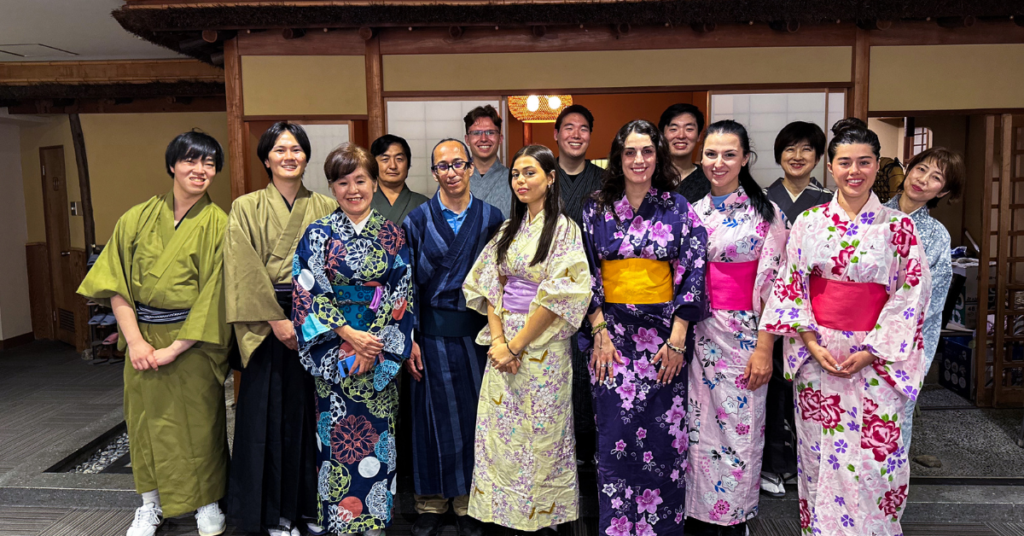
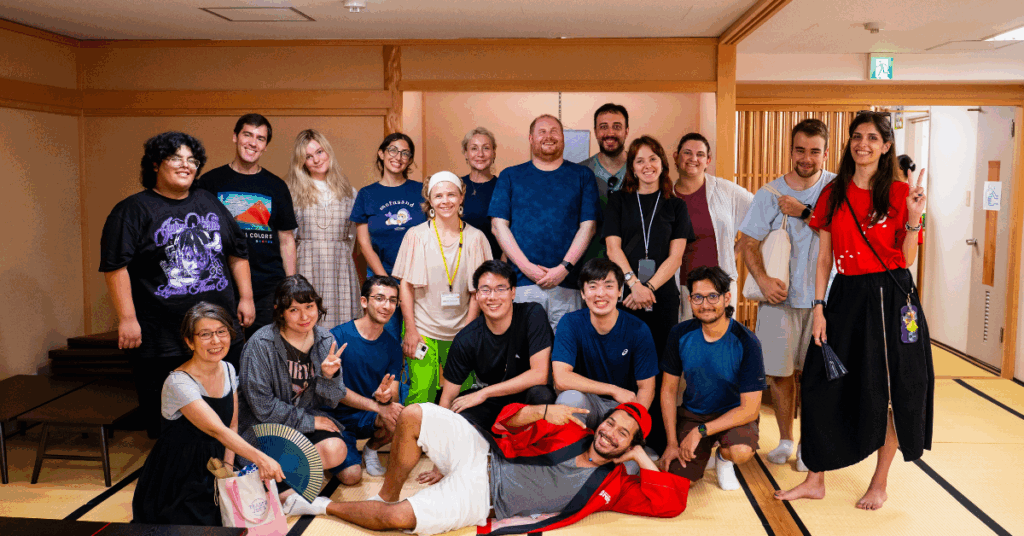
You’ve said goodbye to your new friends, packed your omiyage, and you’re already missing the convenience stores. We know the feeling. For many Study Trippers, a Study Trip isn’t just a holiday; it’s the start of a lifelong relationship with Japan.
We’ve seen this hundreds of times. The “post-trip blues” are real, but the good news is that your journey doesn’t have to end here. This guide outlines two exciting paths for your next step: coming back for a new short-term adventure (with a special discount) or taking the leap to live in Japan long term.
Key takeaways
- The “post-trip blues” are normal: It’s common to feel sad about leaving, but this is a sign that Japan is a great fit for you.
- Path 1 (repeat trip): You can return for a different season or theme and get a 30,000 JPY Repeat Booker Discount.
- Path 2 (long-term move): Many Study Trippers use their trip as a “test run” for a six-month to two-year student visa.
- Success stories: Real Study Trippers have successfully transitioned from a short trip to a long-term life in Japan.
- Free support: Whether you choose Path 1 or Path 2, the Go! Go! Nihon team is here to support your next steps.
Don’t want your adventure to end? It doesn’t have to.
It is completely normal to feel like your trip went by too quickly, with many Study Trippers telling us on their last day, “I don’t want to go back to my country.”
Our team hears this constantly. Crystal, our Study Trip Programs Lead, often hears Study Trippers say, “I can’t believe it’s over,” or simply, “I wish I could stay.” Even our Tour Leader, Jose, notes that the most common goodbye is actually, “I’ll see you again next year.”
If you are feeling this way, it means you have connected with the culture in a meaningful way. You have two clear options to keep that connection alive.
Which path is right for you?
Not sure if you should visit again or move long term in Japan? Use this quick comparison to decide.
| Feature | Path 1: Repeat Study Trip | Path 2: Long-term student |
| Duration | Two to four weeks | Six months to two years |
| Visa type | Temporary visitor (tourist) | Student visa or Working Holiday visa |
| Work rights | None | Part-time (up to 28 hrs/week) |
| Housing | Hotel / homestay — included in Study Trip package | Apartment / sharehouse / homestay — separate accommodation options available |
| Best for… | A fun, stress-free holiday | Fluency & career building |
Path 1: Come back for a new Study Trip adventure!
Many students choose to return for a second short-term adventure to experience a different season or theme, and as a thank you, we offer a special 30,000 JPY Repeat Booker Discount.
Just because you’ve seen Japan in one season doesn’t mean you’ve seen all it has to offer. Many of our Study Trippers become “repeaters,” coming back to experience the cherry blossoms in the spring or the cozy illuminations in the winter.
You can explore our full list of Study Trips to find the next season or theme that fits your schedule.
Path 2: Turn your trip into a life in Japan
Think of your Study Trip as a “test run.” You’ve navigated the trains, ordered food, and lived daily life here. You now know you can do it.
Many Study Trippers use this confidence to apply for a long-term course at one of our partner schools. This isn’t just for gap-year students; we’ve helped independent artists, career changers, and professionals in their 30s make the move.
The “readiness” checklist
Moving to Japan requires more than just enthusiasm; you must pass the immigration process. Before you start your application, you should aim to meet these non-negotiable requirements for a student visa:
- Education: You must provide proof of completing at least 12 years of formal education, which typically means a high school diploma or its equivalent. This is a non-negotiable requirement for a standard student visa.
- Japanese level: Proof of Japanese proficiency, around JLPT N5 or equivalent (for language school).
- Savings: Immigration requires proof that you (or a financial sponsor like a parent) have approximately 1.2 million JPY in liquid savings. This ensures that you can cover tuition and living expenses for the first six months without relying immediately on a part-time job.
Your five-step planning roadmap
Japanese immigration procedures are strict and slow, requiring you to start your application at least six months before your desired start date. Missing a deadline usually means waiting another three to six months for the next term. Once you know you are eligible, follow these steps to start your journey:
- Step 1: Get the full picture. Our comprehensive guide to Studying Abroad in Japan is the perfect place to start.
- Step 2: Explore your options. Discover the right fit in our guide to Study Abroad Programs in Japan.
- Step 3: Choose your new hometown. Explore all the options in our guide to the Best Places in Japan for Studying Abroad.
- Step 4: Understand the visa process. Learn everything you need in our guide on How to Apply for a Japan Student Visa.
- Step 5: Learn the rules for part-time work. Find out how in our guide to Working in Japan for International Students.

How a short trip becomes a long-term dream: what our guides see
It’s a story our trip leaders hear constantly: “I came for three weeks, but now I’m planning out how to move here for good.”
Every year, we see Study Trippers arrive with a simple goal: to visit Japan for a fun holiday. And then they leave with a completely new life plan. A short-term Study Trip often serves as the perfect “low-risk trial run” that gives students the confidence to commit to a longer future in Japan.
According to our guides, these are the most common realizations that turn a tourist into a future resident:
- Many Study Trippers arrive terrified of speaking. After three to four weeks of ordering food, asking for directions, and chatting with teachers, they realize that living in Japan is manageable, even with imperfect Japanese. The fear of the unknown is replaced by the excitement of progress.
- Whether it’s the safety of walking alone at night, the efficiency of the trains, or the kindness of a host family, students often discover that the lifestyle of Japan suits them better than they imagined. It stops being a “foreign country” and starts feeling like a potential home.
- During their free time, many Study Trippers visit universities, chat with foreign residents, or explore local industries. This firsthand exposure often reveals concrete opportunities — like English teaching, IT jobs, or specialized art schools — that they hadn’t considered from back home.
For many of our alumni, a Study Trip wasn’t just a vacation; it was the “proof of concept” they needed to apply for a long-term student visa or a job in Japan later on.
Can I extend my stay during my Study Trip in Japan?
Moving from a short-term Study Trip to a long-term residency is not a simple administrative “switch;” it is a completely separate legal process that usually requires you to return home first.
Many people fall in love with Japan during their Study Trip and want to stay here immediately. However, the “temporary visitor” status you use for a Study Trip and the “student visa” used for living here are legally unconnected.
To live in Japan, you must apply for a Certificate of Eligibility (COE), a mandatory document that takes three to six months for Japanese immigration to process. Because this timeline far exceeds the 90-day limit of your short-term stay, you generally cannot just wait it out in Japan.
Reality check: Think of your Study Trip as a “preview.” To make the move permanent, you will almost always need to return to your home country, apply for the long-term visa there, and wait for your COE approval before flying back to start your new life.
Your path to long-term study abroad in Japan with Go! Go! Nihon
| Study Trip (temporary visitor) | Life in Japan (student visa) | |
| Duration | Up to 90 days | Six months to two years |
| Can I work? | No (strictly prohibited) | Yes (part-time, 28hrs/week) |
| Application time | None (for waiver countries) | Six months (requires COE) |
| Best for | Tasting the lifestyle | Committing to fluency/career |
The best part is that you don’t have to navigate the long-term visa process alone; the same Go! Go! Nihon team that supported your Study Trip offers free support for long-term study abroad in Japan.
Applying for a long-term student visa is more complex than a tourist trip, but we have more than 16 years of experience in this process. “Our support is free, and we will support you through the whole process, so there is no reason not to give it a try,” says Crystal.
Whether you need help choosing a school, deciding which course suits you best, or finding an apartment, we are here to help you.
Further reading: Read our Student Visa Guide to understand the requirements for a long-term stay.
FAQ about returning to Japan
Can I get a discount if I book another trip?
Yes! We offer a 30,000 JPY repeat booker discount off your course tuition for any future Study Trip you join.
If I come back on a student visa, can I work to support myself?
Yes! Unlike your short-term Study Trip where work is strictly prohibited, a long-term student visa allows you to work part time (up to 28 hours per week) once you get the necessary permission. This is how many international students cover their living expenses while studying.
Do I need to be fluent to move long term?
No. Moving to Japan as a language student is one of the most common paths, and many of our partner schools have courses designed for beginners.
In summary: Is studying in Japan right for you?
Your Japan adventure doesn’t have to end with your flight home. Whether you come back for a discounted second trip or take the leap to live here, you have options. You’ve already done the hardest part — taking the first step.
Ready to come back? Contact us to claim your 30,000 JPY Repeat Booker Discount.