Skip to content


You do not need to be perfect to be respectful; Japanese etiquette is primarily about omoiyari, a Japanese cultural aspect that centers consideration and thoughtfulness for others, and how your actions affect the people around you.
The prospect of entering Japanese society as a Study Tripper is often accompanied by a profound duality of emotion. On one hand, there is the exhilaration of immersing oneself in a culture renowned for its rich history and aesthetic depth. On the other, there is a pervasive apprehension regarding the unwritten rules of social engagement. Japan is frequently caricatured as a nation of impenetrable etiquette, where a single misplaced bow can result in swift social ostracization.
However, this fear is largely rooted in misunderstanding. Japanese etiquette is constructed around the concepts of wa (harmony) and omoiyari (consideration). The complex web of unspoken hierarchies and expected etiquette is designed to maintain a peaceful and orderly environment; it is not exclusionary by intent.
As an international student, you are given a “grace period” often called the “gaijin bubble.” Japanese people generally do not expect visitors to grasp every subtlety immediately. When you make a mistake, it is rarely viewed as disrespectful. Rather, it is viewed as a lack of cultural knowledge. This guide breaks down the 10 most important manners in Japan you actually need to know for your Study Trip — such as riding the train, what to do with your shoes, and eating with chopsticks.
Key takeaways
- The “grace period”: Locals are forgiving of mistakes if you show a genuine effort to be respectful.
- Train manners: Silence is the golden rule; avoid phone calls and loud conversations on public transport.
- Chopstick taboos: Never stick chopsticks vertically in rice or pass food chopstick-to-chopstick (these mimic funeral rites).
- The shoe rule: Always remove outdoor shoes at the genkan (entryway) when entering a home or certain traditional spaces.
- Classroom respect: Punctuality is nonnegotiable; arrive 5–10 minutes early to show respect to your sensei.
The 10 rules at a glance
Here is your quick cheat sheet to the essential Japanese manners covered in this guide.
- Silence on public transport: Keep conversations hushed and avoid making phone calls on the train.
- Yield priority seats: Give up your priority seat (yūsenseki) immediately to the elderly, pregnant women, or those with disabilities.
- Be punctual: Arrive at least 5 to 10 minutes early for class so you’re seated and ready when the lesson begins.
- Respect classroom decorum: Take off your hat, do not chew gum, and keep your feet off the desk.
- Address teachers correctly: Please try to call your teacher “sensei” rather than using their name with “-san,” since “sensei” shows more respect. Don’t worry about being perfect; the effort to use the correct title is what matters most.
- Show dining gratitude: Say “itadakimasu” before eating and “gochisōsama deshita” after finishing to thank the cook and staff.
- Avoid chopstick taboos: Never stick chopsticks vertically in rice (tatebashi) or pass food directly chopstick-to-chopstick (hashiwatashi).
- Slurping is OK (for noodles): While not required, some people slurp ramen or soba to cool the noodles and enjoy the flavor more. It isn’t considered rude, so don’t be surprised if you hear it at a local restaurant.
- Remove shoes at the genkan: Never wear outdoor shoes inside a home; remove them at the entryway and step up into the clean zone.
- Master the slipper rules: Never wear slippers on tatami mats (socks/bare feet only) and always switch to dedicated “toilet slippers” when using the restroom.
Do I need to be perfect? (demystifying the rules)
You do not need to be perfect to be respectful; Japanese etiquette is primarily about omoiyari and considering how your actions affect the people around you.
One of the most persistent anxieties for incoming Study Trippers is the belief that Japanese hosts expect visitors to perform etiquette with the precision of a native born in Japan. This is a significant misconception. Research indicates that Japanese people generally do not expect international visitors to grasp the infinite subtleties of their culture immediately.
What matters most in Japanese social interactions is intent and sincerity (makoto). A clumsy attempt to follow the rules is infinitely more respected than a disregard for them. For instance, attempting to speak Japanese, even if the grammar is fractured, signals a respect for the host culture.
Did you know? The true breach of etiquette occurs when a foreigner relies on the “gaijin smash” — knowingly exploiting one’s outsider status to bypass inconvenient rules. This behavior disrupts harmony and is viewed with disdain.
Further reading: If you are ready to experience this culture firsthand, check out our life-changing Japan Study Trip packages.
How do I ride trains and buses respectfully?
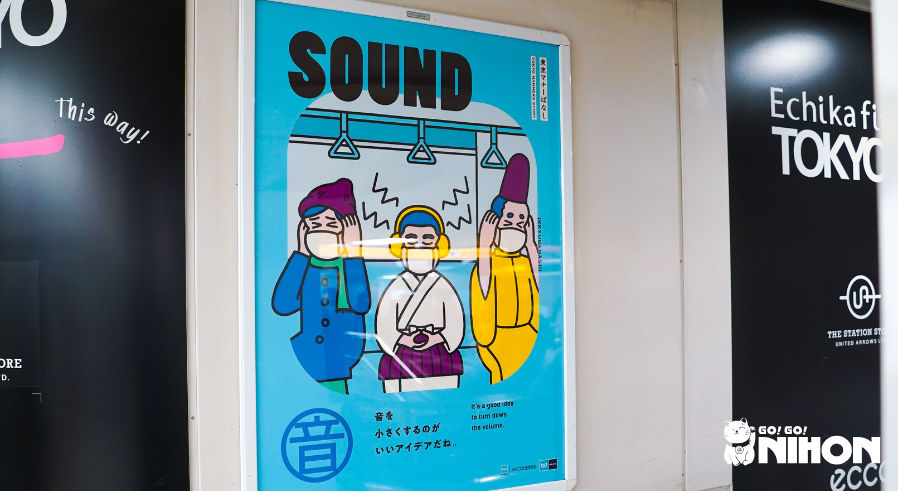
The most important rule on Japanese trains is silence; keep your voice down, put your phone on silent mode, and avoid making phone calls.
Avoid making phone calls on the train. While it is not strictly prohibited by law, many people refrain from making calls to be respectful of the quiet atmosphere. Please keep your phone on silent mode (often called “manner mode” in Japan) and save voice conversations for after you get off.
Here is a quick checklist for a smooth ride:
- Set your phone to “manner mode” (silent/vibrate) immediately upon boarding.
- Avoid “manspreading” (sitting with legs wide apart) or placing bags or luggage on an empty seat.
- Hold your backpack in front of you or place it on the overhead rack to save space.
- Yield priority seats (yūsenseki) immediately to the elderly, pregnant women, or those with disabilities.
Did you know? Sleeping on the train (inemuri) is extremely common and socially acceptable in Japan. It isn’t necessarily viewed as a sign of hard work; it’s simply a normal part of the daily commute. Just be careful not to breach etiquette by leaning onto your neighbor.
How should I act in the classroom?
In a Japanese classroom, punctuality is a sign of respect; aim to arrive at least 5 to 10 minutes early so you are seated and ready when the lesson begins.
The Japanese classroom (kyōshitsu) is structured around vertical relationships and formalized rituals of respect. Punctuality is not merely a logistical preference; it is a moral indicator of respect. Arriving late (chikoku) disrupts the group’s harmony. If lateness is unavoidable, enter quietly, bow deeply to the teacher, and take the nearest seat with a whispered apology.
Teachers are always addressed as sensei (literally “one born before”). You can say “sensei” alone or “Tanaka-sensei,” but never call a teacher by their first name or use the suffix “-san,” which implies a peer relationship.
Study Trip team’s classroom checklist for students:
- Take off your hat when inside the classroom.
- Don’t chew gum or eat candy during class.
- Keep your feet off the desk at all times.
- Greet everyone politely when you enter the room.
Did you know? You should never use honorifics like “-san” or “-sensei” when referring to yourself. Referring to yourself as “Smith-san” is seen as arrogant or unnatural.
Further reading: Learn more about the schools where you can study in our guide to partner language schools.
What are the rules for eating and drinking?
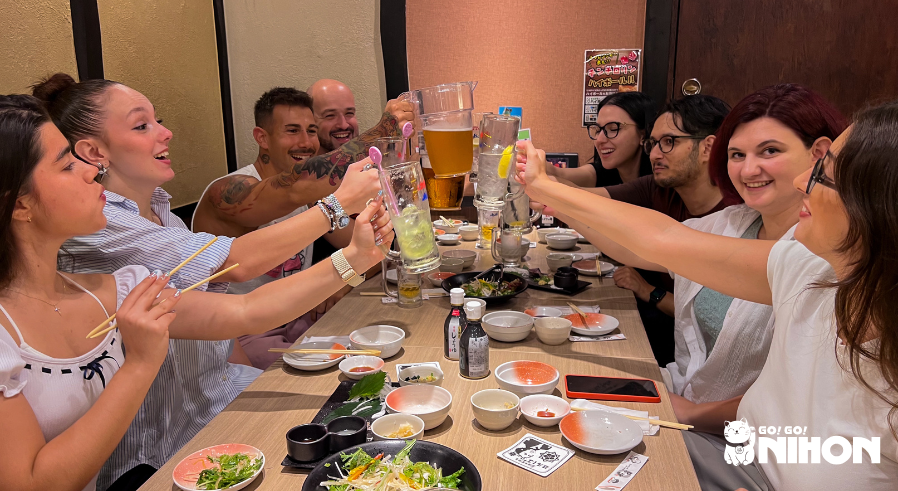
Always say “itadakimasu” (I humbly receive) before eating and “Gochisōsama deshita” (thank you for the meal) after finishing to show gratitude for the food and the people who prepared it.
Dining in Japan is a ritual deeply embedded in respect for nature and gratitude. The phrase itadakimasu acknowledges the sacrifice of the ingredients and the labor of the cook. At the end of the meal, saying gochisōsama deshita (literally “it was a feast”) transforms the transaction of buying food into a human interaction of gratitude.
Chopsticks (hashi) are extensions of the diner’s body, and their usage is governed by strict taboos, many of which are derived from funeral rites.
| Action | Status | Why? |
| Using a chopstick rest | Safe | Keeps the table clean and shows refinement. |
| Vertical chopsticks (Tate-bashi) | Taboo | Never stick chopsticks vertically into rice. It mimics incense offerings to the dead. |
| Passing food (Hashi-watashi) | Taboo | Never pass food chopstick-to-chopstick. It mimics passing bones at a funeral. |
| Slurping noodles (susuru) | Safe | Acceptable for ramen/soba to cool noodles, enhance aroma, and show appreciation. This is a personal preference, not a requirement. |
Additionally, our in-house Japanese teacher, Karin, advises that using your own chopsticks to share food can look inappropriate depending on how close you are with the person. It is recommended to use communal chopsticks instead.
Did you know? For noodle dishes like ramen and soba, slurping (susuru) is encouraged. It cools the hot noodles, enhances the aroma of the broth, and shows appreciation to the chef.
What should I do with my shoes when visiting a home or shrine in Japan?
Never wear outdoor shoes inside a home or on tatami mats; always remove them at the genkan (entryway) and switch to the provided indoor slippers.
The physical environment of Japan is divided into soto (outside/dirty) and uchi (inside/clean). The boundary line is the genkan, and the ritual of crossing it is fundamental.
The slipper protocol:
- Genkan: Remove outdoor shoes while standing on the lower level. Step up onto the raised floor in socks or slippers.
- Turn around: Rearrange your shoes so the toes point toward the door.
- Tatami mats: Never wear slippers on tatami. Enter only in socks or bare feet to avoid damaging the weave.
- Toilet: Switch to the dedicated “toilet slippers” when entering the restroom. Switch back immediately when leaving.
Did you know? A very common mistake is forgetting to switch out of the toilet slippers when leaving the restroom. Just try to remember to change back into your house slippers to keep the living areas fresh and clean.
What if I don’t know what to do?
The best way to navigate any new situation is to observe the locals around you and follow their lead — copying others is a valid and respectful strategy in Japan.
If the room is quiet, be quiet. If shoes are lined up, line yours up. Karin notes, “with many foreign visitors now coming to Japan, locals sometimes see people not following the rules. When you show a genuine effort to be respectful, people really notice and appreciate it.”
It is completely normal not to know what to do when you are unfamiliar with the culture. In that case, simply asking a Japanese person is totally fine — they will see that you are trying to follow the rules and respect the culture. It is much better to ask than to worry or guess.
Did you know? A sincere apology (sumimasen) clears almost all debts. If you make a mistake, apologize, and your effort will be valued more than technical perfection.
Japanese etiquette cheat sheet
Knowing local customs will make navigating daily life smoother. Use this reference for respectful interactions in various scenarios.
| Scenario | Do | Try to avoid |
| Train/Bus | Sleep, read, text silently. | Talking on the phone, eating food. |
| Escalator | Stand on the correct side (Left in Tokyo, Right in Osaka). | Blocking the passing lane. |
| Restaurant | Say iItadakimasu” before eating. | Leaving your chopsticks stuck in the rice. |
| Taxi | Wait for the automatic door to open. | Opening or closing the door yourself. |
| Trash | Carry your trash home with you. | Throwing unseparated trash in random bins. |
FAQ: common questions about Japanese etiquette
What are some basic Japanese etiquette rules?
Focus on the “big three”: maintain silence on public transport, always remove your shoes at the genkan before entering a home, and show politeness through bowing and punctuality.
What is considered disrespectful in Japan?
Specific taboos include “manspreading” or being loud on trains, arriving late to class or meetings, and using chopsticks to pass food directly to another person.
Why is Japanese meal etiquette important?
Dining etiquette is a way to show gratitude. Phrases like itadakimasu acknowledge the life given (ingredients) and the labor of the farmers and cooks, placing the diner in a position of humility.
Do I need to bow to everyone?
Bowing is the primary tool of nonverbal communication. A small nod or eshaku (15-degree bow) is sufficient for most casual encounters, such as passing peers in hallways.
Is slurping noodles really okay?
Yes, for dishes like ramen, soba, and udon, slurping is encouraged to cool the noodles, enhance flavor, and show appreciation. However, this applies only to noodles; slurping pasta or soup from a spoon is generally considered rude.
In summary: Japanese etiquette Study Trippers need to know
Don’t let the fear of making a mistake stop you from enjoying Japan. By mastering these few simple rules — like taking off your shoes, respecting silence on the train, and using chopsticks correctly — you can show the locals that you care about their culture. Remember, sincerity and a smile go a long way.
Ready to experience these traditions firsthand? Book your Study Trip today.