Skip to content

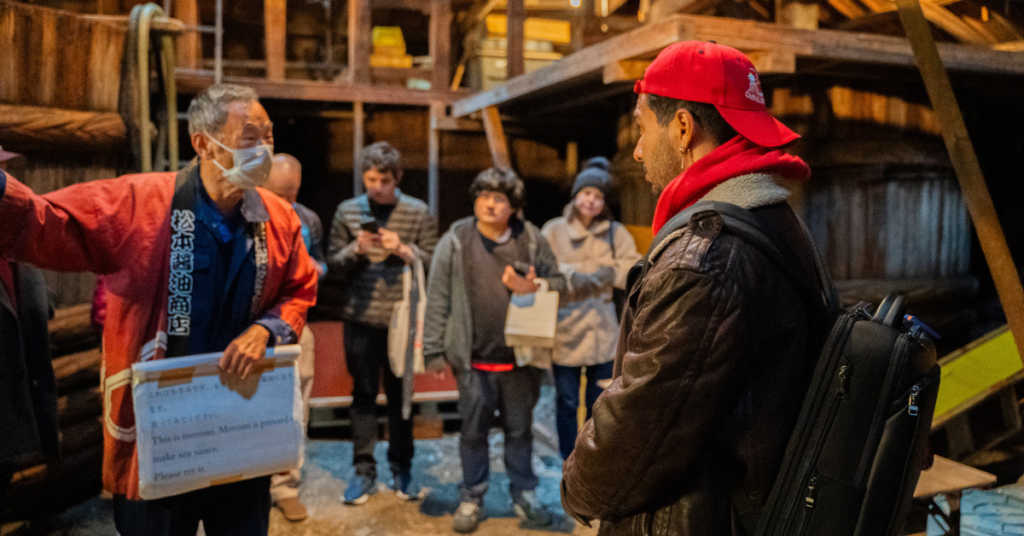
You don’t need to be fluent to survive your trip; you just need a few key phrases to unlock an amazing experience. One of the biggest fears Study Trippers have is the language barrier, but our teachers always tell them: “Don’t worry about mistakes.” Japanese people usually appreciate the effort more than perfect grammar. Instead of trying to speak fluently immediately, set realistic goals for yourself — like simply ordering lunch or asking for directions.
Key takeaways
- Sumimasen (excuse me) and onegaishimasu (please) are the two most powerful words for being polite.
- You can ask for permission to do almost anything by just saying a word followed by “Iidesuka?”
- Daijoubudesu is a versatile phrase that can mean “I’m okay,” “It’s okay,” or even “No thank you.”
- Being friendly and smiling goes a long way, especially since many locals may be nervous about their own English skills.
- Japanese people appreciate the effort you make to speak their language, even if it isn’t perfect.
What are the “magic words” for politeness?
Mastering the basic greetings is the first step to showing respect and making a good impression in Japan. Japanese culture values politeness, and using these “magic words” will open doors for you.
Team Tip: Sumimasen is the most versatile word in the Japanese language. You can use it to say “Excuse me” when pushing through a crowd, “Sorry” if you bump into someone, or “Hey!” to call a waiter at a restaurant.
| Phrase | Pronunciation | Meaning |
| Konnichiwa | Kon-nee-chee-wah | Hello / Good Afternoon |
| Arigatou gozaimasu | Ah-ree-gah-toe go-zai-mas | Thank you very much |
| Sumimasen | Soo-mee-mah-sen | Excuse me / Sorry |
| Onegaishimasu | Oh-neh-guy-she-mas | Nice to meet you / Please treat me well |
The survival toolkit: six essential phrases
Our in-house teachers curated this list of “survival phrases” that will help you navigate almost any situation in your first 48 hours. These are chosen because they are simple, versatile, and highly effective.
1. The “Can I…?” Hack: …Iidesuka? This is a grammar hack! Even if you don’t know verbs, people will understand if you say a noun followed by this phrase.
- Example: “Toire (Toilet) iidesuka?” = “Can I use the toilet?”
2. The “I’m Good” Phrase: Daijoubudesu This is incredibly common. It can mean “I am okay” (if you trip), “It is okay” (if someone apologizes), or even a polite “No thank you” (if shop staff offer a bag).
3. The Request: …Kudasai Use this to ask for things at a store or restaurant.
- Example: “Kore (This) kudasai” = “Can I have this?”
4. The “I’m Lost”: Wakarimasen Use this when you simply don’t understand what is being said. It signals the other person to slow down or use gestures.
5. The “Repeat Please”: Mou ichido If you didn’t catch what someone said, use this to ask them to say it one more time.
6. The “What is it?”: Nandesuka? A simple way to ask “What is this?” or “What did you say?”
Pro tips for communication
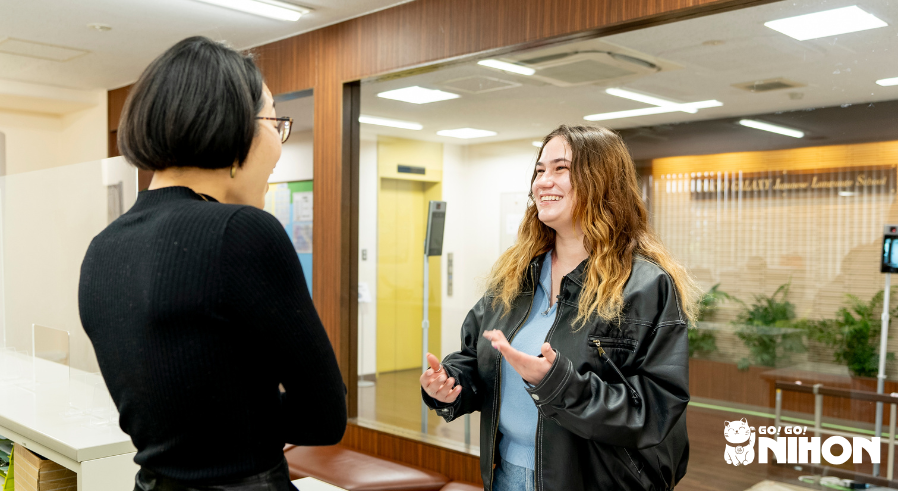
Our teachers advise that being friendly and smiling goes a long way. Many people in Japan are not confident in their English skills, so speaking to them in English might be intimidating for them. Just using a bit of simple Japanese can make a huge difference in breaking the ice .
Remember, you don’t need to be perfect. Use body language, point at menus, and don’t be afraid to use a translation app if you get stuck.
Frequently asked questions about essential Japanese phrases
Do I need to be fluent in Japanese for a Study Trip?
No, you do not need to be fluent. Our teachers emphasize that setting realistic goals — like simply ordering lunch or asking for directions — is better than trying to be perfect. Japanese people usually appreciate the effort more than perfect grammar.
What is the most useful word to know?
“Sumimasen” is likely the most versatile word in the Japanese language. You can use it to say “Excuse me” in a crowd, “Sorry” if you bump into someone, or even “Hey!” to call a waiter at a restaurant.
Is it okay to speak English in Japan?
Yes, but keep in mind that many locals may be nervous about their own English skills. Our teachers suggest that using just a little bit of simple Japanese helps break the ice and makes people feel less intimidated.
How do I ask for permission to do something?
There is a simple “grammar hack” for this: just say the noun followed by “Iidesuka?” (Is it okay?). For example, pointing to a toilet and saying “Toire iidesuka?” is perfectly understood as “Can I use the toilet?”
What if I don’t understand what someone is saying?
If you are confused, you can simply say “Wakarimasen” (I don’t understand). This signals the other person to slow down or use gestures to help you . You can also ask “Mou ichido” to ask them to repeat themselves.
Conclusion
Don’t worry about being perfect; just trying to speak makes a huge difference. As our teachers say, “It’s very rewarding to see students gain confidence when even a little Japanese gets understood.”
Ready to practice these phrases in real life? Explore our Study Trips to start your language adventure.